| 다주택자의 눈물보다, 시장 정상화가 먼저다 양도세 중과는 처벌이 아니라 경제 질서의 복원이다 ai호남뉴스 박충배 편집/칼럼/논설 aihnnewsr@kakao.com |
| 2026년 02월 04일(수) 10:33 |
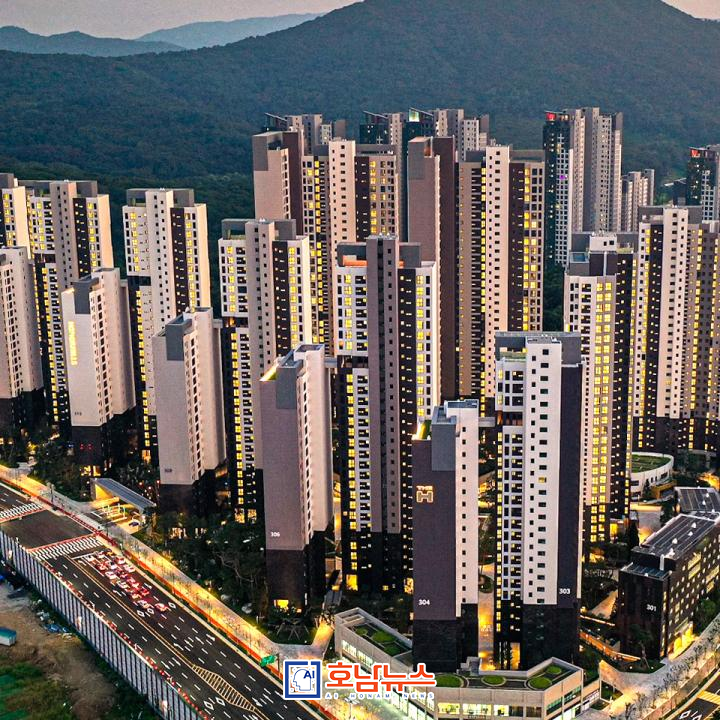 부동산 투기·다주택 상징 이미지 / 사진제공=호남뉴스 |
【사설】
‘다주택자 양도소득세 중과’를 두고 또다시 왜곡된 논쟁이 고개를 들고 있다.
다주택자의 부담을 ‘눈물’로 묘사하며, 정부의 부동산 정상화 정책을 과도한 규제처럼 몰아가는 시선이다. 그러나 이 논쟁에는 결정적인 사실 하나가 빠져 있다. 이 정책은 다주택자 전체를 겨냥한 것이 아니라, 투기 수요가 집중된 지역의 시장 왜곡을 바로잡기 위한 조치라는 점이다.
먼저 짚어야 할 것은 ‘다주택자’라는 개념 자체다.
다주택자는 법률상 단일한 개념이 아니다.
세법·금융·주택공급 제도 전반에서 공통적으로는 2주택 이상 보유자를 다주택자로 분류하지만, 규제의 강도는 주택 수와 지역에 따라 달라진다.
특히 주택 수 산정의 기준은 명의가 아니라 ‘세대’다. 본인과 배우자가 각각 한 채씩을 보유하면, 법적으로는 1세대 2주택이 된다.
그러나 2주택이라는 이유만으로 양도소득세 중과가 적용되는 것은 아니다.
양도세 중과의 전제는 분명하다.
‘조정대상지역에 위치한 주택을 보유한 다주택자’일 때만 중과가 성립한다. 농어촌 지역과 중소도시에 각각 한 채씩을 보유한 경우라도, 두 주택이 모두 비조정대상지역이고 농어촌주택 특례 요건을 충족한다면 중과 대상이 아닐 수 있다.
실제로 농어촌과 다수의 중소도시는 현재도 비 조정 대상지역에 해당한다.
그럼에도 일부에서는 이 정책을 지방까지 옥죈 조치처럼 말한다.
사실과 다르다.
오히려 지방에 거주하면서도 서울 등 조정대상지역에 여러 채를 보유한 세대가 중과의 대상이 된다.
이는 지역 차별이 아니라 투기 억제를 위한 최소한의 조세 원칙이다.
부동산 정책을 바라보는 관점도 이제 바뀌어야 한다.
투자 자산이 부동산에 과도하게 묶이면, 그 자본은 산업·기술·일자리 같은 생산적 영역으로 흘러가지 못한다.
자원 배분이 왜곡되고, 경제 구조는 취약해진다.
주거비 상승은 결혼과 출산을 가로막고, 청년 세대의 미래를 잠식한다.
이런 현실 앞에서 이재명 대통령이 부동산 투기를 반드시 잡겠다고 밝힌 것은 정치적 수사가 아니라 경제 질서를 정상화하겠다는 선언에 가깝다.
이는 특정 계층을 벌주기 위한 정책이 아니라, 시장을 시장답게 돌려놓기 위한 선택이다.
다주택자의 부담을 말하기 전에, 우리는 질문해야 한다.
치솟은 주거비로 내 집 마련의 꿈조차 포기한 청년들, 전·월세 불안 속에서 삶의 기반을 잃어가는 서민들의 고통은 왜 논쟁의 중심에서 늘 비켜서 있는가.
일부의 불편을 과장해 다수의 고통을 지우는 것은 책임 있는 논의가 아니다.
양도세 중과는 엄포가 아니다.
투기에는 분명한 신호를 보내고, 실수요와 지역에는 완충 장치를 둔 정책적 선택이다.
부동산에 갇힌 자본을 산업으로, 투기를 생산으로 돌려야 한다는 요구는 이제 선택이 아니라 필수다.
시장 정상화는 모두를 위한 일이다.
지금 필요한 것은 흔들림 없는 원칙과, 그 원칙을 끝까지 지켜내는 정책의 지속성이다.
[Jeonnam = AI Honam News] aihnnews@kakao.com
Editorial
Market Normalization Must Come Before the Tears of Multi-Home Owners
Capital Gains Tax Surcharges Are Not Punishment, but the Restoration of Economic Order
Once again, a distorted debate is resurfacing over the capital gains tax surcharge on multiple-home owners.
Some portray the burden on multi-home owners as “tears,” framing the government’s real-estate normalization policy as excessive regulation. Yet this debate omits a crucial fact: the policy does not target all multi-home owners indiscriminately, but aims to correct market distortions concentrated in speculative regions.
The first issue that must be clarified is the very definition of a “multi-home owner.”
There is no single, uniform legal definition of a multi-home owner. Across tax law, financial regulation, and housing supply systems, individuals owning two or more homes are generally classified as multi-home owners, but the intensity of regulation varies depending on the number of homes and their location.
Most importantly, the basis for counting homes is not ownership name, but the household unit. If one spouse owns one home and the other spouse owns another, the law regards this as one household owning two homes.
However, owning two homes alone does not automatically trigger a capital gains tax surcharge.
The precondition for the surcharge is clear.
It applies only when a multi-home owner holds homes located in designated speculative adjustment zones. Even if a household owns one home in a rural area and another in a small or mid-sized city, the surcharge may not apply if both properties are outside adjustment zones and the rural-housing exemption requirements are met.
In fact, many rural areas and mid-sized cities remain outside adjustment zones.
Despite this, some argue that the policy squeezes local regions as well. This is simply not true.
Rather, the surcharge applies to households that reside in local areas while owning multiple homes in speculative regions such as Seoul. This is not regional discrimination, but a minimum taxation principle designed to curb speculation.
Our perspective on real-estate policy must now change.
When investment capital becomes excessively locked into real estate, it cannot flow into productive sectors such as industry, technology, and job creation. This distorts resource allocation and weakens the economic structure. Rising housing costs block marriage and childbirth and erode the future of the younger generation.
Against this backdrop, President Lee Jae-myung’s pledge to decisively crack down on real-estate speculation is not political rhetoric, but a declaration to restore economic order. This policy is not intended to punish a particular group, but to return the market to proper functioning.
Before speaking of the burden on multi-home owners, we must ask a more fundamental question.
Why are the hardships of millions of young people—who have given up even dreaming of home ownership, and of ordinary citizens losing stability amid soaring rents—consistently pushed aside in this debate? Exaggerating the inconvenience of a few while erasing the suffering of the many is not a responsible discussion.
The capital gains tax surcharge is not a bluff.
It sends a clear signal against speculation while providing safeguards for genuine demand and regional realities. Redirecting capital trapped in real estate toward industry, and speculation toward production, is no longer a choice—it is a necessity.
Market normalization serves everyone.
What is needed now is unwavering principle, and the policy consistency to see that principle through to the end.
 ai호남뉴스 박충배 편집/칼럼/논설 aihnnewsr@kakao.com