| “700년 바다의 시간이 깨어난다”… 신안선 자단목 1,000점 최초 공개 한국 수중고고학 50년의 출발점, 14세기 동아시아 해상교역의 비밀을 드러내다 ai호남뉴스 박충배 편집/칼럼/논설 aihnnewsr@kakao.com |
| 2026년 03월 06일(금) 14:33 |
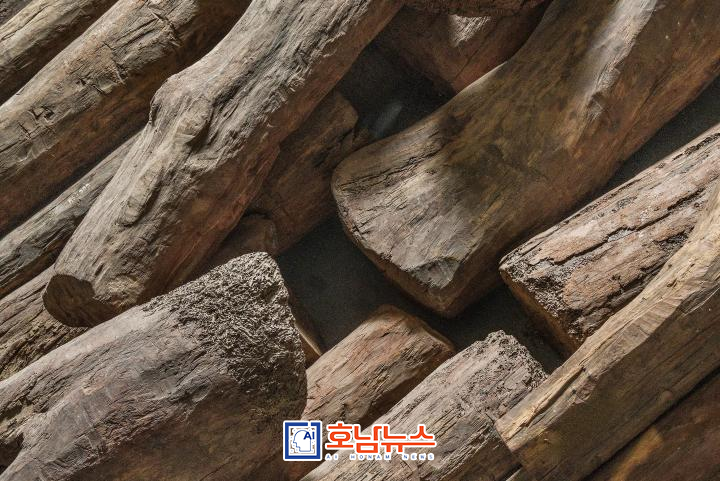 신안선 출수 자단목 / 사진제공=국립유산청 국립해양유산연구소 |
700년 전 바다에 잠든 동아시아 해상 교역의 흔적이 국민 앞에 모습을 드러낸다.
국가유산청 국립해양유산연구소(소장 이은석)는 한국 수중 발굴 50주년 기념 특별전(2026년 9월 14일~2027년 2월 14일)에 앞서, 핵심 전시품인 ‘신안선 출수 자단목’ 약 1,000여 점을 3월 25일부터 27일까지 3일간 국립해양유산연구소 강당(전남 목포시)에서 사전 공개한다고 밝혔다.
이번 공개 행사는 오는 9월 개막 예정인 특별전 「신안선 자단목이 들려주는 해상 교역(가제)」에 대한 국민적 관심을 높이고, 1976년 신안선 발굴을 시작으로 50년간 축적된 한국 수중고고학의 연구 성과를 국민과 공유하기 위해 마련됐다.
■ “한국 수중고고학의 출발점” 신안선 발굴
신안선은 1323년 중국에서 일본으로 향하던 원대(元代) 무역선으로, 전라남도 신안 해역에서 침몰했다.
이 배는 1976년 발굴을 통해 세상에 처음 알려졌으며, 이는 우리나라 최초의 본격적인 해양유산 조사로 평가된다.
신안선 발굴은 이후 한국 해양고고학 연구 체계를 확립하는 계기가 되었으며, 지금까지도 동아시아 해상 교역 연구의 가장 중요한 자료 가운데 하나로 꼽힌다.
당시 발굴을 통해 확인된 유물은 약 2만 4천여 점에 달한다.
출수 유물에는 중국 도자기, 동전, 향신료, 목재, 등 다양한 교역품이 포함되어 있어 14세기 동아시아 국제 교역의 실상을 보여주는 대표적 사례로 평가된다.
■ “대양을 건넌 고급 목재” 자단목 1,000점 공개
이번 사전 공개의 핵심은 신안선 출수 유물 가운데서도 가장 주목받는 ‘자단목’이다.
자단목은 동남아시아와 인도 지역에서 생산된 최고급 목재로, 당시 중국을 거쳐 일본으로 운송되던 귀중한 교역품이었다.
특히 신안선에서는 자단목이 선적 상태로 대량 발견되어 학계에서도 매우 중요한 유물로 평가된다.
이 같은 사례는 세계적으로도 드물어, 당시 국제 해상 교역망의 규모와 구조를 보여주는 핵심 단서로 꼽힌다.
일부 자단목에는 문자, 기호, 절단 및 가공 흔적, 등이 남아 있어 물품 관리 방식과 유통 체계, 목적지 등을 추정할 수 있는 중요한 연구 자료로 활용되고 있다.
■ “열린 연구 현장” 국민에게 먼저 공개
이번 사전 공개 행사에서는 참가자들이 자단목의 형태와 표면 흔적을 직접 관찰하며 역사적 의미를 이해하는 체험형 프로그램이 진행된다.
행사는 3월 25일부터 27일까지 매일 오후 1시부터 2시까지 국립해양유산연구소 강당에서 열린다.
참가 신청은 3월 9일부터 13일까지 전자우편(juhye39@korea.kr)으로 가능하며, 선착순 총 30명(일일 10명)을 모집한다.
연구소 측은 이번 공개가 단순한 전시 홍보를 넘어 특별전 준비 과정 자체를 국민과 공유하는 ‘열린 연구 현장’이라는 점에서 의미가 크다고 설명했다.
■ 자단목 1,000점 정밀 기록화 착수
국립해양유산연구소는 올해 신안선 출수 자단목 약 1,000여 점에 대한 체계적인 기록화 사업도 추진한다.
이번 사업에서는 고해상도 촬영, 정밀 실측, 3차원 데이터 구축, 등을 통해 자단목의 형태와 문양, 명문 등 원형 정보를 정밀하게 기록할 예정이다.
이 자료는 향후 학술 연구, 전시 콘텐츠, 디지털 문화유산 제작 등 다양한 분야에서 활용될 전망이다.
국립해양유산연구소 관계자는 “이번 사전 공개는 한국 수중고고학의 출발점이 된 신안선 발굴 50년의 성과를 국민과 나누는 자리”라며 “신안선 자단목이 보여주는 14세기 동아시아 해상 교역의 역사적 가치와 의미를 재조명하는 계기가 되길 기대한다.”고 밝혔다.
“Seven Centuries Beneath the Sea Awaken”… 1,000 Pieces of Sinan Shipwreck Red Sandalwood Revealed for the First Time
The Starting Point of Korean Underwater Archaeology—Unveiling the Secrets of 14th-Century East Asian Maritime Trade
[AI Honam News] aihnnews@kakao.com
Traces of East Asian maritime trade that lay hidden beneath the sea for more than 700 years are set to be revealed to the public.
The National Research Institute of Maritime Cultural Heritage under the Korea Heritage Service (Director: Lee Eun-seok) announced that approximately 1,000 pieces of red sandalwood recovered from the Sinan shipwreck will be pre-released from March 25 to March 27 at the institute’s auditorium in Mokpo, Jeollanam-do.
This preview will take place ahead of a special exhibition commemorating the 50th anniversary of Korea’s underwater excavations (September 14, 2026 – February 14, 2027).
The event aims to raise public interest in the upcoming exhibition, tentatively titled “Maritime Trade Told by the Red Sandalwood of the Sinan Shipwreck,” and to share with the public the research achievements accumulated over the past 50 years since the discovery of the Sinan shipwreck in 1976.
■ “The Beginning of Korean Underwater Archaeology” — The Sinan Shipwreck
The Sinan shipwreck was a Yuan Dynasty merchant vessel that sank in 1323 while sailing from China to Japan in the waters off Sinan, Jeollanam-do.
The vessel came to light through an excavation in 1976, which is widely regarded as Korea’s first full-scale investigation of maritime cultural heritage. The discovery became a milestone that helped establish the research framework for Korean maritime archaeology.
Approximately 24,000 artifacts were recovered from the shipwreck.
These included a wide range of trade goods such as:
Chinese ceramics
Coins
Spices
Timber
Together, they provide a vivid picture of international maritime trade in East Asia during the 14th century, making the Sinan shipwreck one of the most important archaeological cases for understanding historical sea routes and commerce.
■ “Precious Timber that Crossed the Ocean” — 1,000 Pieces of Red Sandalwood
The highlight of the preview event is the red sandalwood recovered from the Sinan shipwreck, one of the most notable categories of artifacts discovered.
Red sandalwood is a high-value timber produced in Southeast Asia and India, which was transported through China and traded to Japan during the medieval period.
What makes the Sinan shipwreck particularly significant is that the red sandalwood was recovered in large quantities in its original cargo state, a rare case even by global archaeological standards.
As such, it offers crucial clues about the scale and structure of international maritime trade networks of the time.
Some of the recovered pieces bear inscriptions, symbols, and traces of cutting or processing, which provide valuable evidence for studying cargo management systems, distribution networks, and intended destinations.
■ An “Open Research Site” Shared with the Public
During the preview event, participants will have the opportunity to observe the shapes and surface traces of the red sandalwood firsthand, allowing them to interpret historical contexts directly from the artifacts.
The event will take place daily from 1:00 PM to 2:00 PM from March 25 to March 27 at the auditorium of the National Research Institute of Maritime Cultural Heritage.
Applications will be accepted by email (juhye39@korea.kr
) from March 9 to March 13, with 30 participants selected on a first-come, first-served basis (10 people per day).
The institute emphasized that the event is more than just promotional for the upcoming exhibition; it represents an “open research site” where the preparation process of a major exhibition is shared directly with the public.
■ Systematic Documentation of 1,000 Red Sandalwood Artifacts
The institute also plans to carry out a comprehensive documentation project for approximately 1,000 pieces of red sandalwood recovered from the Sinan shipwreck this year.
The project will include:
High-resolution photography
Precise measurements
3D data construction
These efforts will accurately record original information such as the shape, patterns, and inscriptions of the artifacts.
The collected data will serve as foundational resources for future academic research, exhibitions, and digital cultural heritage content production.
An official from the National Research Institute of Maritime Cultural Heritage stated,
“This preview event is an opportunity to share with the public the achievements of the past 50 years of research since the discovery of the Sinan shipwreck, the starting point of Korean underwater archaeology.”
They added,
“We hope it will help re-illuminate the historical significance and value of the Sinan shipwreck’s red sandalwood as evidence of 14th-century East Asian maritime trade.”
 ai호남뉴스 박충배 편집/칼럼/논설 aihnnewsr@kakao.com