| “피로 시작해 빛으로 완성된 민주주의” 3·15에서 12·3까지… 국민이 써 내려온 대한민국의 서사 ai호남뉴스 박충배 편집/칼럼/논설 aihnnewsr@kakao.com |
| 2026년 03월 17일(화) 11:05 |
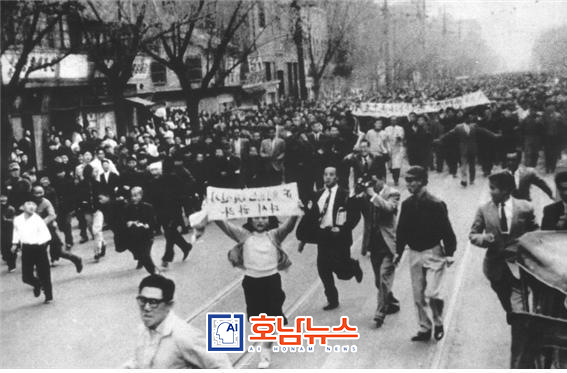 이승만 정권 3.15 부정선거 / 사진제공=호남뉴스 |
[ai호남뉴스] haenamnews@kakao.com
대한민국 민주주의의 역사는 단절된 사건들의 나열이 아니다.
그것은 하나의 흐름이며, 하나의 서사다.
권력의 왜곡과 폭력에 맞서 국민이 어떻게 깨어나고, 연대하며, 끝내 역사를 바로잡아 왔는지를 보여주는 살아 있는 기록이다.
그 시작은 1960년 3월 15일, 부정선거였다. 국민의 선택은 조작되었고, 권력은 진실을 억눌렀다.
그러나 은폐된 진실은 끝내 드러났다. 마산 앞바다에서 발견된 학생의 시신은 단순한 사건이 아니라, 국가 권력이 국민 위에 군림할 때 어떤 비극이 발생하는지를 보여준 상징이었다.
이 사건은 국민에게 질문을 던졌다. “이 나라는 누구의 것인가.”
그 질문에 가장 먼저 응답한 것은 학생들이었다.
1960년 4월, 전국의 학생들이 거리로 나섰고 시민들이 뒤를 이었다.
총칼 앞에서도 물러서지 않았던 그 외침은 결국 정권을 무너뜨렸다.
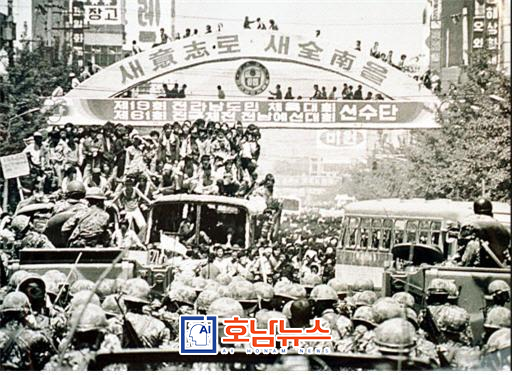 5.18 광주 민주화운동 / 사진제공=호남뉴스 |
4·19 혁명은 단순한 정권 교체가 아니라, 국민이 스스로 주권자임을 선언한 사건이었다. 이때부터 대한민국 민주주의는 ‘제도’가 아니라 ‘행동’으로 존재하기 시작했다.
하지만 민주주의는 한 번의 승리로 완성되지 않았다.
권력은 다시 폭력으로 돌아왔고, 국민은 다시 선택의 기로에 놓였다.
1980년 5월, 광주에서 벌어진 비극은 그 절정을 보여준다.
국가는 국민을 향해 총을 겨눴지만, 시민들은 공동체를 지키기 위해 서로를 보호하며 끝까지 버텼다.
5·18 광주민주화운동은 단순한 지역 사건이 아니라, 국가 폭력에 맞선 시민 주권의 가장 처절하고도 숭고한 기록이다.
이 광주의 정신은 1987년 6월 항쟁으로 이어졌다.
고문과 죽음, 억압 속에서도 국민은 물러서지 않았고, 결국 직선제 개헌이라는 제도적 민주주의를 쟁취했다. 이 과정은 대한민국 민주주의가 단순한 감정의 분출이 아니라, 희생과 연대를 통해 구조를 바꾸는 힘이라는 것을 증명했다.
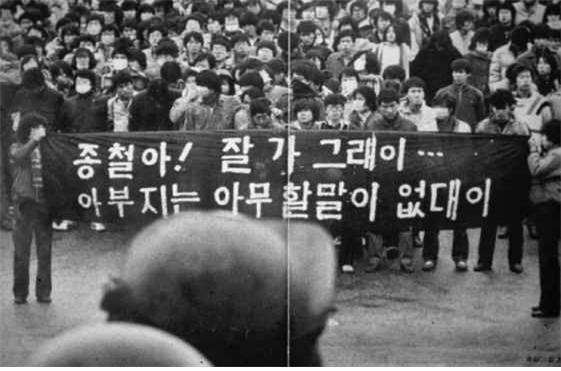 노태우 정권 6.10 항쟁 / 사진제공=호남뉴스 |
세월이 흐르며 민주주의는 제도적으로 정착된 듯 보였지만, 권력의 오만은 반복되었다.
그러나 달라진 것은 국민이었다.
2016년 촛불혁명에서 시민들은 폭력이 아닌 평화로, 혼란이 아닌 질서로 광장을 채웠다.
수백만의 시민이 들었던 촛불은 단순한 시위 도구가 아니라, 헌정 질서를 바로잡는 주권의 상징이었다.
결국 대통령은 헌정 사상 처음으로 국민의 힘에 의해 파면되었고, 이는 대한민국 민주주의가 성숙한 시민의 힘으로 유지된다는 사실을 전 세계에 보여준 사건이었다.
그리고 지금, 우리는 또 하나의 역사적 흐름 위에 서 있다.
권력의 일탈과 민주주의의 위기가 다시 제기되는 순간마다 국민은 침묵하지 않았다.
광장은 다시 열리고, 새로운 방식의 참여가 등장하고 있다.
과거의 촛불이 그랬듯, 오늘의 응원봉 역시 시대를 표현하는 상징이자 시민 의지의 확장된 형태다.
이 모든 흐름을 관통하는 것은 하나다.
3·15에서 4·19로, 5·18에서 6월 항쟁으로, 촛불에서 오늘의 광장으로 이어지는 하나의 축이다. 그것은 바로 국민이 주권자라는 사실을 끊임없이 증명해 온 역사다.
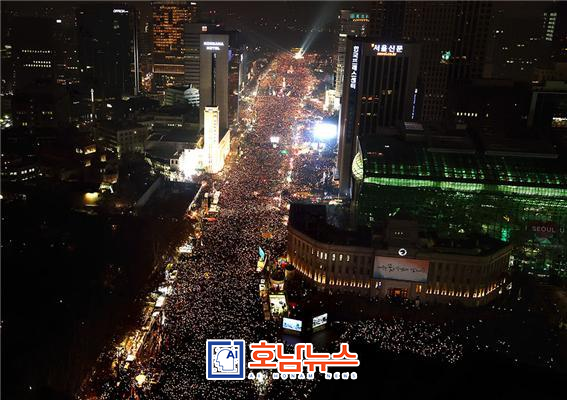 2016 촛불 평화 혁명 / 사진제공=호남뉴스 |
대한민국의 민주주의는 완성된 체제가 아니다.
그것은 끊임없이 점검되고, 때로는 거리에서 다시 세워지는 살아 있는 과정이다. 그리고 그 중심에는 언제나 국민이 있었다.
결국 이 나라를 움직여 온 힘은 권력이 아니라 국민이었다.
피로 시작된 역사는 빛으로 이어졌고, 그 빛은 아직 꺼지지 않았다.
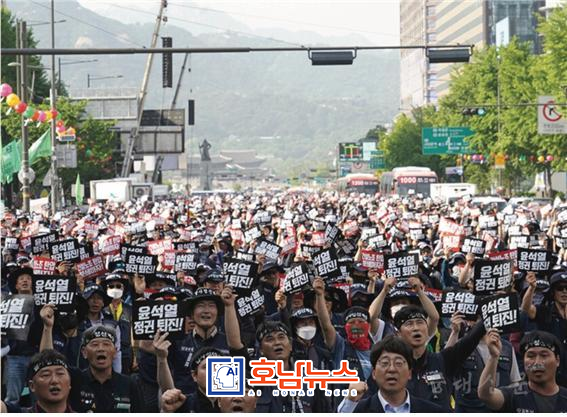 윤석열퇴진 평화시위 / 사진제공=호남뉴스 |
【AI Honam News Editorial】
[AI Honam News] haenamnews@kakao.com
“Democracy Began in Blood and Was Completed in Light”
From March 15 to December 3… The Narrative Written by the People of Korea
The history of democracy in South Korea is not a mere collection of disconnected events.
It is a continuous flow, a single narrative.
It is a living record of how the people awakened, united, and ultimately corrected the course of history in the face of distorted power and violence.
Its beginning lies in March 15, 1960—the fraudulent election.
The people’s will was manipulated, and truth was suppressed by those in power.
Yet, the hidden truth eventually surfaced.
The body of a student found in the waters of Masan was not just an incident—it became a symbol of the tragedy that unfolds when state power stands above its people.
It posed a fundamental question to the nation: “To whom does this country belong?”
The first to answer were the students.
In April 1960, students across the country took to the streets, soon joined by ordinary citizens.
Their voices did not retreat, even in the face of guns and violence.
That cry ultimately brought down the regime.
The April 19 Revolution was not merely a change of government.
It was a declaration that the people themselves are sovereign.
From that moment on, democracy in Korea existed not merely as a system, but as an act of collective will.
Yet democracy was not completed in a single victory.
Power returned once again in the form of violence, and the people were once again forced to choose.
In May 1980, the tragedy of Gwangju revealed this reality at its most extreme.
The state turned its guns on its own citizens.
But the people stood together, protecting one another and defending their community to the very end.
The May 18 Gwangju Democratic Uprising is not just a regional event—it is the most profound and painful testament to popular sovereignty resisting state violence.
The spirit of Gwangju carried forward into the June Democratic Uprising of 1987.
Despite torture, death, and oppression, the people did not step back.
In the end, they achieved constitutional reform and direct presidential elections.
This process proved that democracy in Korea is not merely an emotional outburst, but a force capable of transforming systems through sacrifice and solidarity.
As time passed, democracy appeared to have taken institutional root.
Yet the arrogance of power did not disappear.
What had changed, however, was the people.
In 2016, during the Candlelight Revolution, citizens filled the squares—not with violence, but with peace; not with chaos, but with order.
The candles held by millions were not simple tools of protest.
They were symbols of sovereignty, restoring constitutional order.
For the first time in Korean history, a president was removed from office by the power of the people.
This moment demonstrated to the world that Korean democracy is sustained by the maturity and participation of its citizens.
And now, we stand within yet another chapter of this historical flow.
Whenever power strays and democracy is threatened, the people have not remained silent.
The squares reopen, and new forms of participation emerge.
Just as candles once symbolized an era, today’s light sticks represent an evolving expression of civic will.
What runs through all these moments is one continuous thread.
From March 15 to April 19, from May 18 to June 1987, from candlelight to today’s public squares—
it is a single axis of history.
A history that has consistently proven one truth: the people are the sovereign.
Democracy in South Korea is not a finished system.
It is a living process—constantly examined, and at times rebuilt in the streets.
And at its center, there have always been the people.
In the end, the force that has driven this nation forward has never been power, but the people.
A history that began in blood has continued in light—
and that light has yet to fade.
 ai호남뉴스 박충배 편집/칼럼/논설 aihnnewsr@kakao.com