| “20조를 쓰느냐, 키우느냐의 문제다. 우리는 키워야 한다.” ai호남뉴스 박충배 편집/칼럼/논설 aihnnewsr@kakao.com |
| 2026년 03월 17일(화) 12:49 |
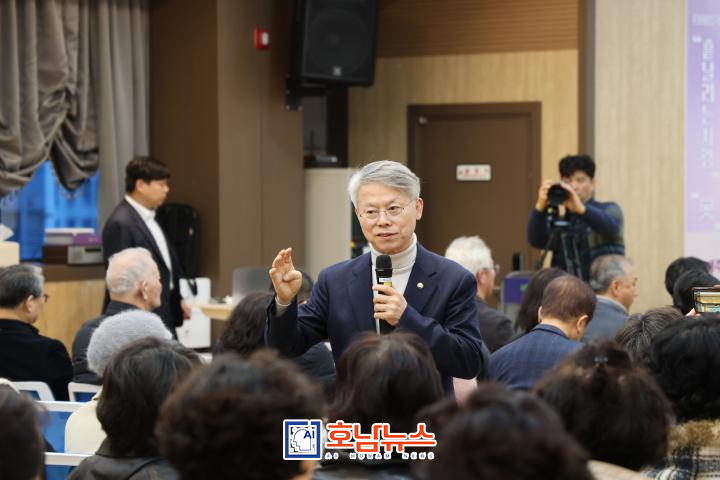 민형배 전남광주특별시장 후보 여수 경청투어 / 사진제공=민형배의원실 |
더불어민주당 전남·광주통합특별시장 경선 후보인 민형배 국회의원(광주 광산구을)이 여수에서 ‘20조 원’을 단순한 재정이 아닌 ‘300조 투자로 확장되는 성장 엔진’으로 만들겠다는 구상을 제시하며 강도 높은 현장 행보에 나섰다.
■ “20조 → 300조”… ‘전략적 투자자 모델’ 제시
민 의원은 지난 16일 여수중부새마을금고 대강당에서 열린 ‘20조 시민기획 경청투어’에서 “20조 원을 어떻게 쓰느냐에 따라 전남·광주가 서울을 넘어설 수 있다”고 강조했다.
그는 특히 기존의 ‘예산 집행 방식’을 정면으로 뒤집는 ‘전략적 투자자 모델’을 제안했다.
“예산을 소비로 끝내지 않고, 투자로 연결해야 한다.
우리가 직접 투자자가 되어 민간 투자를 끌어내면 16조 원으로 300조 원 이상의 투자 효과를 만들 수 있다.”
이는 단순한 재정 투입이 아니라 공공이 ‘마중물 투자자’로 참여해 민간 자본을 증폭시키는 구조로, 전남·광주 통합특별시의 경제 구조 자체를 바꾸겠다는 구상이다.
■ 나머지 4조… “사람과 안전에 투자”
민 의원은 20조 원 중 나머지 재원에 대해 인재 양성, 사회 안전망 구축 등 ‘사람 중심 투자’에 집중하겠다는 방향도 제시했다.
이는 산업 투자와 복지·교육을 동시에 설계하는 이중 성장 전략으로 해석된다.
■ 여수산단 “석유화학에서 미래산업으로”… 대전환 촉구
현장에서는 여수 국가산업단지의 위기 문제도 집중적으로 제기됐다.
한 시민이 “여수 산단이 어렵다”고 호소하자, 민 의원은 산업 구조 개편의 필요성을 강하게 언급했다.
“이제는 산업단지의 대전환이 필요하다.
재료·소재·신재생에너지 등 미래 산업으로 바꿔야 한다.”
또한 그는 ‘국토남부 신산업수도개발청’ 신설을 제안하며 초첨단 산업 유치와 국가 차원의 집중 지원 체계 구축 필요성을 강조했다.
■ “여수~광주 1시간”… 광역교통 혁명 제시
교통 인프라 개선 요구에 대해서도 구체적인 방향을 제시했다.
시민들은 “광주까지 빠르게 이동할 수 있는 철도망이 필요하다”고 요청했고, 민 의원은 “1시간 이내 생활권을 만드는 광역교통망 구축”을 약속했다.
이는 통합특별시의 핵심 조건인 ‘초광역 생활권 형성’을 현실화하는 전략으로 풀이된다.
■ 여수 국제공항 검토… “국제행사 도시엔 필수 인프라”
국제공항 필요성에 대한 질문에는 보다 전향적인 입장을 밝혔다.
“여수는 국제행사가 많은 도시다.
무안국제공항처럼 여수도 국제공항이 필요하다.
진지하게 검토하겠다.”
이는 여수를 글로벌 해양·관광·산업 도시로 확장하기 위한 핵심 인프라 전략으로 주목된다.
■ 순천 경제인 간담회… “중소기업, 플랫폼으로 살려야”
앞서 민 의원은 순천 동부권 경제인 간담회에도 참석해 전남 산업의 기반인 ‘뿌리 산업’ 지원 방안을 제시했다.
그는 ‘추천앱 기반 플랫폼 경제 모델’을 언급하며 중소기업 판로 확대 전략을 제안했다.
“중소기업 제품을 알릴 수 있는 추천 플랫폼을 만들면 가장 효과적인 마케팅 수단이 될 수 있다.”
이는 지역 산업의 디지털 전환과 유통 혁신을 동시에 겨냥한 전략이다.
■ “예산 시대 끝, 투자 시대 시작”… 통합특별시 경제전쟁 선언
이번 여수 경청투어는 단순한 의견 수렴을 넘어 전남·광주 통합특별시의 경제 전략 방향을 제시한 자리로 평가된다.
민 의원은 “이제는 예산을 나누는 시대가 아니라, 투자로 키우는 시대”라며 ‘20조 → 300조’ 경제 확장 모델을 통해 남부권을 대한민국 제2의 경제권으로 도약시키겠다는 의지를 분명히 했다.
■ AI호남뉴스 분석
이번 발언의 핵심은 명확하다.
✔ 예산을 ‘소비’가 아닌 ‘투자’로 전환
✔ 공공이 ‘투자자’가 되는 새로운 경제 모델
✔ 산업·교통·공항·플랫폼까지 포함한 전면적 구조 개편
이는 단순한 공약이 아니라 전남·광주 통합특별시의 경제 패러다임 자체를 바꾸는 실험이다.
성공한다면, 이 모델은 대한민국 지방경제의 새로운 표준이 될 가능성이 있다.
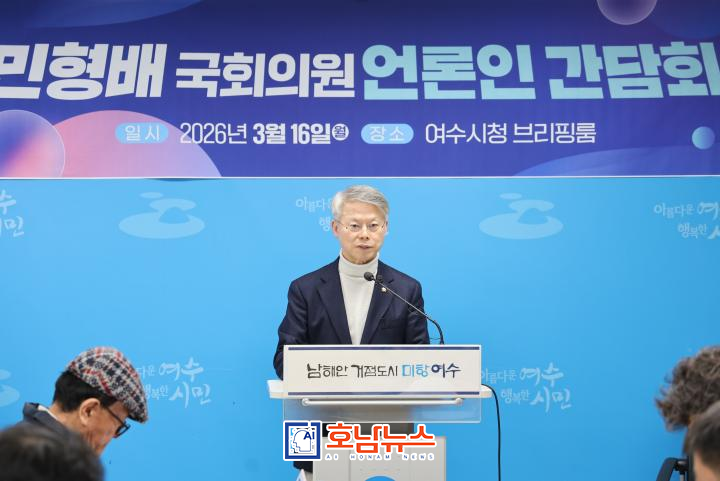 민형배 전남광주특별시장 후보 여수 경청투어 언론인 간담회 / 사진제공=민형배의원실 |
[AI Honam News] haenamnews@kakao.com
“The question is not whether to spend 20 trillion won, but whether to grow it. We must grow it.”
Rep. Min Hyung-bae, a candidate in the Democratic Party primary for the Gwangju–Jeonnam Integrated Special City mayoral race, has unveiled a bold vision in Yeosu: transforming the 20 trillion won in special government support into a “growth engine expandable to 300 trillion won in investment,” while continuing an intensive on-site campaign.
■ “20 trillion → 300 trillion”… Proposal of a ‘Strategic Investor Model’
At the “20 Trillion Citizen Planning Listening Tour” held on March 16 at the Yeosu Jungbu Saemaeul Geumgo Hall, Rep. Min emphasized that
“how we use the 20 trillion won will determine whether Gwangju–Jeonnam can surpass Seoul.”
He proposed a “strategic investor model” that fundamentally redefines conventional budget execution.
“We must not end with consumption of the budget, but connect it to investment.
If we participate directly as investors and attract private capital,
16 trillion won can generate over 300 trillion won in investment.”
This approach positions the public sector as a ‘catalytic investor’, leveraging public funds to amplify private capital—aiming to restructure the entire economic system of the integrated Gwangju–Jeonnam Special City.
■ Remaining 4 trillion… “Investing in people and safety”
Rep. Min stated that the remaining portion of the 20 trillion won would be allocated to
▲ talent development
▲ social safety nets
This reflects a dual-growth strategy, combining industrial investment with welfare and education.
■ Yeosu Industrial Complex: “From petrochemicals to future industries”
Local concerns about the Yeosu National Industrial Complex were also raised.
In response to a citizen’s concern about industrial decline, Rep. Min stressed the need for structural transformation:
“A major transition of industrial complexes is necessary.
We must shift toward materials, advanced components, and renewable energy industries.”
He also proposed the establishment of a “Southern National New Industry Capital Development Agency”, emphasizing the need for a national-level system to attract cutting-edge industries.
■ “Yeosu–Gwangju in 1 hour”… Proposal for a metropolitan transport revolution
On transportation infrastructure, citizens called for faster rail connections to Gwangju.
Rep. Min responded by pledging to build a metropolitan transport network enabling travel within one hour, a key step toward realizing a mega-regional living zone under the integrated city framework.
■ Yeosu International Airport under review
Regarding the need for an international airport, Rep. Min expressed openness:
“Yeosu hosts many international events.
Like Muan International Airport, Yeosu also needs an international airport.
We will seriously review this.”
This is seen as a critical infrastructure strategy to elevate Yeosu into a global marine, tourism, and industrial hub.
■ Suncheon business roundtable… “SMEs must survive through platforms”
Prior to the Yeosu event, Rep. Min met with business leaders in eastern Jeonnam (Suncheon), proposing support measures for the region’s root industries.
He introduced a platform-based recommendation app model to expand SME market access:
“If we create a platform that promotes SME products,
it will become the most effective marketing tool.”
This strategy targets both digital transformation and distribution innovation in regional industries.
■ “The era of budgeting is over, the era of investment begins”
The Yeosu listening tour went beyond gathering opinions—it outlined the economic strategy for the integrated Gwangju–Jeonnam Special City.
Rep. Min declared:
“The era of dividing budgets is over. The era of growing them through investment has begun.”
Through the “20 trillion → 300 trillion” expansion model, he reaffirmed his ambition to transform the southern region into Korea’s second major economic powerhouse.
■ AI Honam News Analysis
The core message is clear:
✔ Shift budgets from consumption to investment
✔ Position the public sector as an investor
✔ Drive comprehensive restructuring across industry, transport, aviation, and platforms
This is not merely a campaign pledge—it is an experiment to redefine the economic paradigm of regional Korea.
If successful, it could become a new standard for regional economic development nationwide.
 ai호남뉴스 박충배 편집/칼럼/논설 aihnnewsr@kakao.com