| “27개 도시 원도심, 30개의 성수동으로 뒤집는다.”… 민형배, ‘원도심 르네상스’ 초강력 승부수 ai호남뉴스 박충배 편집/칼럼/논설 aihnnewsr@kakao.com |
| 2026년 03월 26일(목) 10:32 |
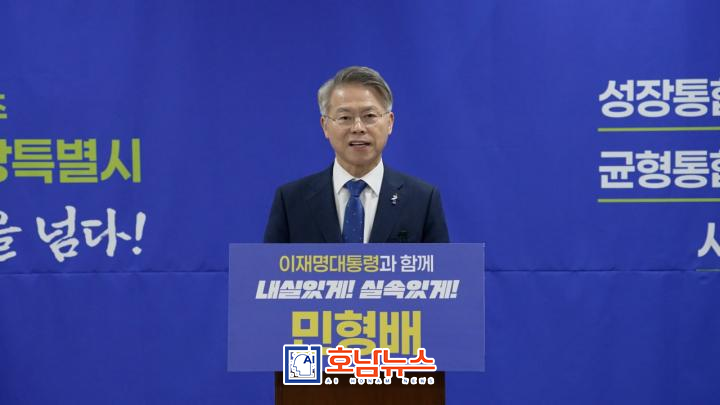 260202_출마선언 / 사진제공=민형배의원실 |
전남·광주 원도심의 운명을 바꾸겠다는 ‘도시 재편 혁명’이 공식화됐다.
단순한 상권 활성화를 넘어, 도시의 구조 자체를 다시 설계하겠다는 초대형 정책이 제시된 것이다.
더불어민주당 전남광주통합특별시장 경선 후보인 민형배 국회의원(광주 광산구을)은 25일 정책자료를 통해 “전남광주 27개 시군구 원도심에 ‘성수동 30개’를 조성하겠다.”며 ‘원도심 르네상스: 글로컬 타운 30곳 조성’ 전략을 전격 발표했다.
■ “문제는 낡음이 아니라, 다시 찾을 이유가 없는 것”
민 의원은 광주 충장로·금남로를 비롯해 순천, 목포, 여수, 나주 등 주요 중심상권이 쇠락한 현실을 지적하며, 원인을 ‘시설 노후화’가 아닌 ‘도시 매력의 상실’로 진단했다.
그는 “사람과 소비가 빠져나간 이유는 공간이 낡아서가 아니라, 다시 방문할 이유가 사라졌기 때문”이라며 “이제는 상권 몇 개를 살리는 방식이 아니라 도시의 흐름 자체를 바꾸는 구조적 전환이 필요하다”고 강조했다.
■ “서울 성수동 복제 아니다”… 전남형 ‘글로컬 타운’ 설계
이번 전략의 핵심은 서울 성수동 모델을 단순 모방하는 것이 아니라, 지역 산업·문화·자원을 결합한 ‘글로컬 타운’으로 재설계하는 데 있다.
글로컬 타운은 지역 기반(Local)과 글로벌 연결(Global)을 결합한 도시 거점으로, 사람·자본·문화가 지속적으로 유입되는 ‘순환형 상권’을 목표로 한다.
민 의원은 전남광주 27개 시군에 총 30곳을 조성하고, 정부의 글로컬 상권 및 로컬거점 사업과 연계해 재원과 실행력을 확보한다는 구상이다.
■ 공공이 기준 만들고, 민간이 투자한다… ‘5대 전략’ 제시
민 의원은 실행 전략으로 다음과 같은 5대 구조 개편 방안을 제시했다.
공공형 지구단위계획 수립, 민간 투자 유도 패키지 구축, 보행·체류 중심 거리 재편, 공실 상가 순환 활용 시스템, 임대료 안정 및 장기 임대 전환 지원, 특히 공공이 업종 구성, 건축·경관 기준 등 ‘도시 설계 기준’을 먼저 제시하고, 이를 준수하는 민간 투자에 대해 용적률 완화와 인허가 간소화 등 인센티브를 제공하는 방식이다.
이는 투자 리스크를 줄이고 예측 가능한 환경을 만들어 민간 자본을 끌어들이겠다는 전략으로 해석된다.
■ “차량 중심 도시 끝”… 걷고 머무는 ‘소비형 거리’로 전환
도시 구조도 근본적으로 바뀐다.
차량 중심 도로 체계를 보행·체류 중심으로 전환해 “걷고, 머무르고, 소비로 이어지는 거리”를 만들겠다는 것이다.
또 공실 상가는 팝업스토어, 공방, 전시 공간 등으로 즉시 활용 가능한 ‘순환형 공간’으로 전환해 상권 공백을 최소화할 계획이다.
■ 젠트리피케이션 차단… “살아남는 상권이 아니라, 지속되는 상권”
이번 정책에서 가장 주목되는 부분은 ‘임대 구조 개혁’이다.
민 의원은 상권 활성화 이후 발생하는 임대료 상승과 기존 상인의 이탈을 막기 위해 임대료 안정 협약과 장기 임대 전환 지원을 병행하겠다고 밝혔다.
이를 통해 초기 창업자와 문화·콘텐츠 기반 입점자가 지속적으로 정착할 수 있는 생태계를 구축한다는 전략이다.
■ “도시는 다시 설계할 수 있다”… 구조 전환 선언
민 의원은 “상권은 살아나는 것보다 지속되는 것이 더 중요하다”며 “공공이 방향을 설계하고 민간이 투자와 운영을 이어가는 구조로, 사람이 떠나지 않는 원도심을 만들겠다.”고 밝혔다.
이번 ‘성수동 30개 프로젝트’는 단순한 도시재생을 넘어 전남·광주 통합특별시 시대를 겨냥한 ‘도시 경쟁력 재편 전략’이라는 점에서 향후 지역 발전 담론의 핵심 축으로 떠오를 전망이다.
“27 declining downtowns will be overturned by creating 30 Seongsu-dongs.”
Min Hyung-bae unveils a high-impact ‘Downtown Renaissance’ strategy
— Public sector sets the blueprint, private sector drives investment
— Declaration to build 30 “Glocal Towns” across the region
— From walkability to rent stability… “Creating commercial districts that endure, not just revive”
【Jeonnam·Gwangju = AI Honam News】 aihnnews@kakao.com
A sweeping “urban restructuring revolution” aimed at transforming the fate of aging downtowns across Jeonnam and Gwangju has been officially announced.
Going beyond simple commercial revitalization, the initiative proposes a fundamental redesign of the urban structure itself.
Min Hyung-bae, a member of the National Assembly and a candidate in the Democratic Party primary for the Jeonnam–Gwangju Integrated Metropolitan Mayor, announced on the 25th a bold plan to “create 30 Seongsu-dongs across the 27 cities and counties of Jeonnam and Gwangju,” unveiling his “Downtown Renaissance: 30 Glocal Towns” strategy.
■ “The problem is not that places are old, but that there is no reason to return”
Rep. Min pointed out the decline of major commercial districts such as Chungjang-ro and Geumnam-ro in Gwangju, as well as downtown areas in Suncheon, Mokpo, Yeosu, and Naju.
He diagnosed the root cause not as physical deterioration, but as a loss of urban appeal.
“The reason people and consumption have left is not because the spaces are outdated, but because there is no longer a reason to revisit,” he said. “We need a structural transformation that changes the flow of the city itself, not temporary fixes for a few commercial zones.”
■ Not a copy of Seongsu-dong, but a localized ‘Glocal Town’ model
At the core of the strategy is not replicating Seoul’s Seongsu-dong, but redesigning it into a “Glocal Town” model tailored to the conditions of Jeonnam and Gwangju.
A Glocal Town combines local identity with global connectivity, aiming to create a “circulating commercial ecosystem” where people, capital, and culture continuously flow in.
The plan is to establish 30 such hubs across 27 municipalities and link them with national programs for glocal and local commercial districts to secure funding and accelerate implementation.
■ Public sets the rules, private sector invests: five key strategies
Rep. Min outlined five major structural strategies:
Establishment of public-led district unit planning
Development of private investment incentive packages
Transformation into pedestrian- and stay-oriented streets
Circular utilization of vacant commercial spaces
Rent stabilization and support for long-term leasing
The government will first define clear standards—such as industry mix, architectural design, and landscape guidelines—and provide incentives like relaxed floor area ratios and simplified approvals for private investors who comply.
This approach aims to reduce investment risk and create a predictable environment to attract private capital.
■ “End of car-centered cities”… shift to walkable, consumption-driven streets
The urban framework itself will undergo a fundamental shift.
Car-oriented road systems will be transformed into pedestrian-friendly environments that encourage walking, staying, and spending.
Vacant storefronts will be repurposed into pop-up stores, workshops, and exhibition spaces, forming a “circulating space model” that minimizes commercial voids.
■ Preventing gentrification… “Not just revived, but sustainable districts”
A key highlight of the policy is rent structure reform.
To prevent rent spikes and displacement after revitalization, the plan includes rent stabilization agreements and support for long-term leases.
This aims to ensure that early entrants—such as startups and creative businesses—can remain and grow within the ecosystem.
■ “Cities can be redesigned”… declaration of structural transformation
Rep. Min emphasized, “What matters is not whether a commercial district can be revived, but whether it can be sustained.”
“By having the public sector design the direction and the private sector lead investment and operations, we will create downtowns where people do not leave.”
The “30 Seongsu-dongs Project” is expected to emerge as a central pillar in regional development discourse, going beyond conventional urban regeneration and positioning itself as a comprehensive strategy to redefine urban competitiveness in the era of an integrated Jeonnam–Gwangju metropolitan city.
 ai호남뉴스 박충배 편집/칼럼/논설 aihnnewsr@kakao.com