| “광주는 서로를 지키며 버텼다”… 1980년 5월 25일, 최후 진압 앞에서도 무너지지 않은 시민공동체 주먹밥·헌혈·자율치안으로 지킨 도시… 신군부는 재진입 작전 준비, 시민은 끝까지 민주주의 외쳤다 ai호남뉴스 박충배 편집/칼럼/논설 aihnnewsr@kakao.com |
| 2026년 05월 18일(월) 13:16 |
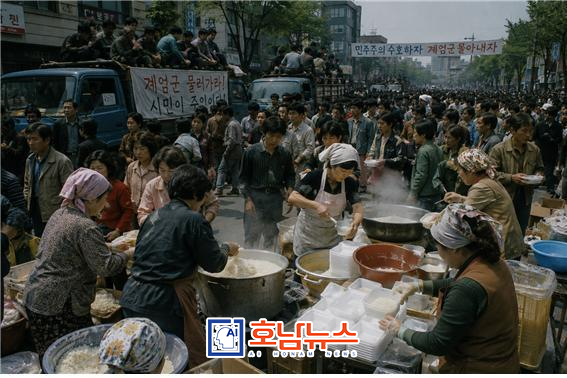 5.18광주민주항쟁 밥을 짓는 모습 / 사진제공=chat gpt |
【전남·광주=AI호남뉴스】 aihnnews@kakao.com
1980년 5월 25일의 광주는 무너지지 않았다.
국가폭력이 잠시 멈춘 자리에서 시민들은 서로를 지켰고, 피 흘린 도시를 스스로 돌보았다. 총칼이 물러난 거리에 남은 것은 혼란이 아니라 주먹밥과 헌혈, 자율치안과 공동체 질서였다.
광주는 이미 하나의 시민공동체였다.
시민들은 부상자를 위해 피를 나눴고, 굶주린 이들을 위해 주먹밥을 만들었다. 상인과 학생, 노동자와 주부, 종교인과 재야 인사들은 각자의 자리에서 도시를 지켰다.
그러나 그 평화는 오래가지 못했다.
새벽 4시, 이희성 계엄사령관은 광주 재진입 작전 계획을 수립하고 지시했다. 신군부는 시민들의 자치와 연대를 폭도로 몰아붙이며 최후 진압을 준비하고 있었다.
오전 10시, YMCA에서는 재야 원로와 민주 인사들이 모여 새로운 수습대책위원회 구성 필요성을 확인했다. 시민들의 희생을 줄이고 광주의 요구를 하나로 모으기 위한 절박한 논의였다.
오후 3시, 시민 5만여 명은 제3차 민주수호 범시민 궐기대회를 열었다. 시민들은 “최후의 일인까지, 최후의 일각까지 투쟁하자”는 결의문을 채택하고 시가행진에 나섰다.
광주는 두려움보다 민주주의를 택했다.
오후 5시, 홍남순 변호사 등 재야 원로들이 참여하는 새로운 항쟁지도부가 구성됐다. 시민들은 무정부 상태가 아니라 질서 있는 항쟁, 절제된 저항, 공동체적 민주주의를 보여주고 있었다.
오후 5시 30분, 최규하 대통령은 광주를 방문했지만 전교사에서 담화문을 발표하는 데 그쳤다. 시민들이 있는 현장으로 들어가 진실을 마주하지 못한 방문은 광주의 절규에 대한 답이 되지 못했다.
그 무렵 안병하 전남도경국장은 “경찰이 시민에게 총부리를 겨눌 수 없다”며 무력진압 요구를 거부했다. 국가기관 안에서도 최소한의 양심은 살아 있었다.
5월 25일의 광주는 학살 직전의 도시였지만, 동시에 가장 인간다운 도시였다.
국가는 총을 준비했지만, 시민은 밥을 나눴다.
계엄군은 재진입을 준비했지만, 시민은 서로의 생명을 지켰다.
신군부는 광주를 진압하려 했지만, 광주는 끝까지 민주주의를 외쳤다.
그날 광주가 지킨 것은 한 도시가 아니었다.
대한민국 민주주의의 마지막 양심이었다.
【AI Honam News Column】
“Gwangju Endured by Protecting One Another”… May 25, 1980, a Civic Community That Refused to Collapse Even Before the Final Crackdown
A city sustained by rice balls, blood donations, and voluntary public order… while the military regime prepared to re-enter, citizens defended democracy until the very end.
【Gwangju & Jeonnam = AI Honam News】 aihnnews@kakao.com
On May 25, 1980, Gwangju did not collapse.
In the brief moment when state violence paused, citizens protected one another and cared for their wounded city themselves. What remained in the streets after the guns temporarily fell silent was not chaos, but rice balls shared among neighbors, blood donations for the injured, voluntary security patrols, and a remarkably disciplined civic order.
Gwangju had already become a united civic community.
Citizens donated blood for the wounded and prepared rice balls for the hungry. Merchants, students, workers, housewives, religious leaders, and pro-democracy activists each stood in their own places to protect the city.
But that fragile peace would not last long.
At 4:00 a.m., Martial Law Commander Lee Hee-seong finalized and ordered plans for the military’s re-entry into Gwangju. The new military regime was preparing a final assault, branding the citizens’ self-governance and solidarity as a “riot.”
At 10:00 a.m., civic elders and democracy activists gathered at the YMCA and confirmed the need to establish a new emergency committee. It was a desperate effort to reduce further bloodshed and unite the demands of the citizens.
At 3:00 p.m., nearly 50,000 citizens gathered for the Third Pan-Citizen Rally to Defend Democracy. They adopted a resolution declaring, “We will fight until the last person and the last moment,” before marching through the streets together.
Gwangju chose democracy over fear.
At 5:00 p.m., a new leadership group for the resistance was formed, joined by civic elders including attorney Hong Nam-soon. The citizens were demonstrating not anarchy, but organized resistance, restrained defiance, and a form of community-based democracy.
At 5:30 p.m., President Choi Kyu-hah visited Gwangju, but only delivered a statement from the Combat Education Command headquarters. His visit, without directly facing the citizens or confronting the truth unfolding in the streets, failed to answer the cries of Gwangju.
Around the same time, Jeonnam Provincial Police Chief Ahn Byeong-ha refused orders for violent suppression, declaring, “The police cannot point guns at citizens.” Even within the state apparatus, a minimum sense of conscience still remained.
The Gwangju of May 25 was a city standing on the brink of massacre, yet at the same time it was the most humane of cities.
The state prepared guns, but the citizens shared food.
The martial forces prepared to re-enter, but the citizens protected each other’s lives.
The military regime sought to crush Gwangju, but Gwangju continued to cry out for democracy until the very end.
What Gwangju protected that day was not merely a city.
It was the last conscience of South Korean democracy.
 ai호남뉴스 박충배 편집/칼럼/논설 aihnnewsr@kakao.com