2026.04.01 (수) 19:22


 닫기
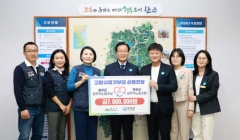
닫기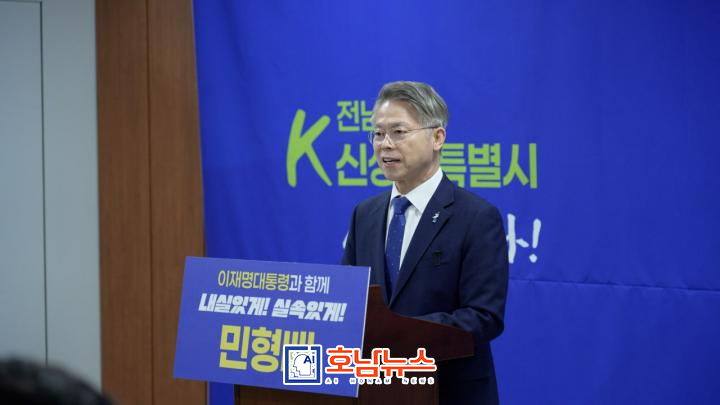 전남광주특별시 통합시장 출마 기자회견 / 사진제공=민형배의원실 |
전남·광주 농업의 판을 근본부터 뒤흔드는 ‘소득 중심 산업 전환’이 공식 선언됐다. 단순 생산 확대를 넘어, 농업을 고부가가치 산업으로 재정의하는 대전환 구상이다.
더불어민주당 전남광주통합특별시장 경선후보인 민형배 국회의원(광주 광산구을)은 1일 정책 발표를 통해 “전남광주 농업은 전국 최대 생산지이면서도 농가 소득은 최하위권이라는 구조적 모순에 갇혀 있다”며 “이제는 생산이 아니라 ‘소득’을 기준으로 농정을 완전히 다시 설계해야 한다.”고 밝혔다.
민 후보는 현재 전남 농업의 핵심 문제를 ‘쌀 중심 구조’로 규정했다.
실제 2024년 기준 전남 농가소득은 625만원에 불과한 반면, 과수·시설농업 중심으로 구조를 전환한 경북은 1,676만원에 달해 격차가 세 배 가까이 벌어졌다. 2019년 대비 농업소득 역시 전남은 28.8% 급락한 반면, 경북은 29.3% 상승하며 ‘농업 구조가 곧 소득’이라는 현실을 그대로 보여줬다.
민 후보는 이를 뒤집기 위한 해법으로 ‘7대 농정 대전환 전략’을 제시했다.
첫째, 농정의 기준을 생산량이 아닌 농가 소득으로 전면 전환한다.
보조금 중심 행정에서 벗어나 실제 농민의 수익을 기준으로 정책을 설계하겠다는 것이다.
둘째, 고부가가치 품목 중심으로 산업 구조를 재편한다.
쌀 중심 단일 구조에서 벗어나 김치 원료, 과일, 친환경 농산물, 기능성 작물 등 시장 경쟁력이 높은 품목으로 전환하고, 생산–저장–가공–유통–수출까지 연결된 ‘완결형 산업 체계’를 구축한다.
셋째, 유통 구조 혁신이다.
개별 농가 단위 판매 구조를 광역 공동판매 체계로 전환하고, 온라인 도매시장과 직거래 플랫폼을 확대해 생산자가 가격 결정에 참여하는 구조를 만든다. ‘팔수록 손해 보는 농업’을 ‘팔수록 남는 산업’으로 바꾸겠다는 전략이다.
넷째, 농식품 가공 산업을 핵심 성장축으로 육성한다.
원료 공급지에 머물던 전남광주를 벗어나, 원료형·완제품·브랜드 가공 산업을 동시에 키워 부가가치의 외부 유출을 차단하고 ‘대한민국 식품산업 수도’로 도약시키겠다는 구상이다.
다섯째, 청년농 정책을 ‘농업 CEO 육성 시스템’으로 전환한다.
단순 유입 정책을 넘어 농지·주거·창업·유통·가공을 통합 지원해 청년이 농업을 ‘직업’이 아닌 ‘산업’으로 선택하도록 구조를 바꾼다.
여섯째, 식량안보에 대한 정당한 보상체계를 구축한다.
민 후보는 “식량을 책임지는 지역이 가난한 것은 국가 구조의 실패”라고 지적하며, 직불금 인상과 쌀값 안정제 법제화, 식량안보 기여 보상제 도입을 추진하겠다고 밝혔다.
일곱째, 에너지와 AI를 결합한 농업 혁신이다.
재생에너지와 분산형 전력 시스템을 활용해 농업용 전기요금을 획기적으로 낮추고, AI 기반 작황 예측·가격 분석 시스템을 도입해 ‘데이터 기반 농업’으로 전환한다는 전략이다.
이번 정책은 단순한 농업 지원책을 넘어, 전남·광주를 ‘농업 지역’에서 ‘농식품 산업 중심지’로 탈바꿈시키는 구조 개혁이라는 점에서 주목된다.
민 후보는 “전남광주 농업의 본질은 생산이 아니라 소득이어야 한다”며 “보조금으로 버티는 농업이 아니라 산업으로 성장하는 농업으로 전환하겠다.”고 강조했다. 이어 “전남광주를 대한민국 농식품 산업의 수도로 만들어 농민의 삶과 지역 경제를 동시에 살리겠다.”고 밝혔다.
“Rice Alone Has No Future”… Min Hyung-bae Declares ‘Income-Driven Agricultural Revolution’ in Jeonnam–Gwangju
“Ending the Paradox of Korea’s Largest Producer”… Bold Plan to Overturn ₩6.25M Farm Income Structure
Toward a ‘Food Industry Capital’ Through Distribution, Processing, Energy, and AI Integration
【Jeonnam·Gwangju = AI Honam News】 aihnnews@kakao.com
A sweeping transformation of agriculture in Jeonnam and Gwangju—centered on shifting from production to income—has been officially declared. The plan goes beyond increasing output, redefining agriculture as a high value-added industry.
Min Hyung-bae, a National Assembly member (Gwangju Gwangsan-eul) and candidate in the Democratic Party primary for Mayor of the Jeonnam–Gwangju Integrated Special City, announced on the 1st that “Jeonnam–Gwangju, despite being the nation’s largest agricultural producer, remains trapped in a structural contradiction where farm incomes are among the lowest.” He emphasized, “It is time to redesign agricultural policy entirely—shifting the focus from production to income.”
Min identified the core issue as a “rice-centered agricultural structure.”
As of 2024, average farm income in Jeonnam stands at just 6.25 million KRW, while Gyeongbuk—having transitioned to high-value sectors such as fruit and greenhouse farming—reaches 16.76 million KRW, nearly three times higher. From 2019 to 2024, Jeonnam’s agricultural income dropped by 28.8%, whereas Gyeongbuk saw a 29.3% increase, underscoring the reality that “agricultural structure determines income.”
To reverse this trend, Min proposed a “Seven-Point Agricultural Transformation Strategy.”
First, shift the core metric of agricultural policy from production volume to farm income.
Policies will be designed based on actual earnings rather than subsidy size.
Second, restructure toward high-value crops.
Move beyond rice-centric farming to focus on competitive products such as kimchi ingredients, fruits, eco-friendly produce, and functional crops, building a fully integrated system from production to storage, processing, distribution, and export.
Third, overhaul distribution systems.
Transition from fragmented individual sales to a regional collective sales model, while expanding online wholesale markets and direct trading platforms to give farmers a role in price-setting.
Fourth, foster the agri-food processing industry as a key growth engine.
By developing raw materials, finished products, and branded goods simultaneously, the region aims to prevent value leakage and establish itself as Korea’s food industry capital.
Fifth, transform youth farming policies into a “CEO farmer development system.”
Beyond simple entry support, the plan integrates land, housing, startup support, distribution, and processing to enable young farmers to build sustainable agricultural businesses.
Sixth, introduce fair compensation for food security.
Min stressed that “regions responsible for national food supply should not remain poor,” pledging to expand direct payments, legislate a rice price stabilization system, and introduce compensation mechanisms for food security contributions.
Seventh, integrate energy and AI into agriculture.
By leveraging renewable and distributed energy systems to significantly reduce electricity costs, and implementing AI-based crop forecasting and price analysis, the sector will transition into data-driven agriculture.
This policy initiative is not merely a support measure but a structural reform aimed at transforming Jeonnam–Gwangju from a traditional farming region into a central hub of the agri-food industry.
Min concluded, “The essence of agriculture in Jeonnam–Gwangju must shift from production to income,” adding, “We will move from subsidy-dependent farming to industry-driven agriculture and build Jeonnam–Gwangju into Korea’s leading food industry capital—revitalizing both farmers’ livelihoods and the regional economy.”
 ai호남뉴스 박충배 편집/칼럼/논설 aihnnewsr@kakao.com