2026.04.01 (수) 19:22


 닫기
닫기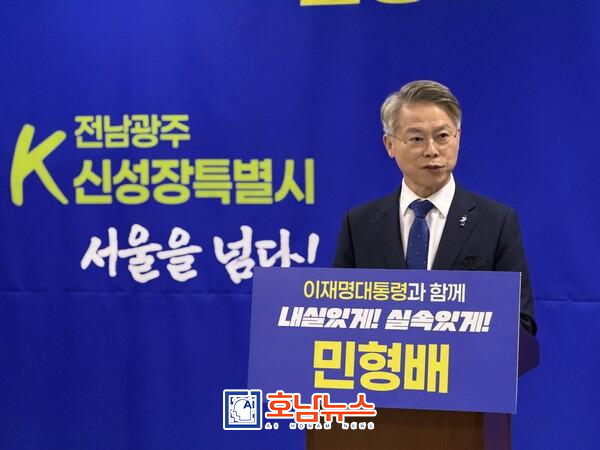 민형배 전나광주특별시장 예비후보 / 사진제공=민형배의원실 |
지방자치의 판이 바뀌고 있다. 단순한 제도 개정을 넘어, 권력의 중심을 ‘마을’로 이동시키는 구조적 대전환이 시작됐다는 평가다.
더불어민주당 전남광주통합특별시장 경선 후보인 민형배 국회의원(광주 광산구을)은 1일 지방자치법 일부개정법률안의 국회 본회의 통과를 강력히 환영하며, 이를 계기로 ‘마을자치정부’ 구축을 핵심으로 하는 자치분권 혁신 구상을 전면 제시했다.
민 의원은 이날 논평에서 “이번 법률안 통과는 풀뿌리 민주주의를 선언이 아닌 ‘작동하는 제도’로 끌어올린 역사적 전환점”이라며 “주민자치는 이제 실험 단계를 끝내고 대한민국 자치분권의 중심축으로 자리 잡아야 한다.”고 밝혔다.
국회는 지난 3월 31일, 주민자치회의 설치·운영과 행정·재정적 지원 근거를 명확히 하는 지방자치법 개정안을 의결했다. 그동안 형식적 기구에 머물렀던 주민자치회가 실질적 권한과 기능을 갖춘 자치 주체로 전환될 수 있는 제도적 기반이 마련된 것이다.
■ “393개 마을이 정부다”… 전남·광주 전역 ‘자치 혁명’ 설계
민형배 의원은 이번 개정을 단순한 법 개정으로 보지 않았다. 그는 이를 ‘국가 운영 구조를 바꾸는 출발점’으로 규정하며, 전남·광주 전역에 걸친 ‘마을자치정부’ 구축 구상을 구체화했다.
민 의원은 “전남광주 393개 읍·면·동을 중심으로 ‘마을자치정부’를 구축하고, 27개 시·군·구 기초정부를 실질적 권한을 가진 생활정부로 전환해야 한다.”며 “이는 행정 개편이 아니라 시민주권을 풀뿌리에서 구현하는 국가 개조 수준의 변화”라고 강조했다.
■ “권한·재정·참여 3대 축”… 주민이 설계하고 결정하는 도시
민 의원은 ‘마을자치정부’ 실현을 위한 3대 핵심 축으로 ▲권한 ▲재정 ▲참여의 전면 확대를 제시했다.
우선 주민자치회에 정책 결정과 집행 기능까지 포함한 실질적 권한을 부여하고, 주민세 환원과 마을 단위 재정 확대를 통해 ‘재정 자치’를 확보하겠다는 구상이다.
또한 마을계획 수립부터 예산 편성, 사업 평가까지 전 과정에 주민 참여를 제도화해, 행정이 아닌 주민이 지역의 미래를 직접 설계하는 구조로 전환하겠다는 방침이다.
아울러 기초정부에 인사·재정·조직 자율성을 부여해 ‘강한 기초정부’를 구축하고, 광역은 전략과 조정, 기초와 마을은 실행과 생활정치를 담당하는 역할 분담 체계를 확립하겠다는 구상도 함께 제시됐다.
■ “통합은 분산이다”… 전남·광주 통합특별시 운영 원리 재정의
민형배 후보는 전남·광주 통합특별시의 방향성 역시 분명히 했다.
그는 “통합은 권한을 모으는 것이 아니라 나누는 것”이라며 “광역이 모든 것을 쥐는 구조가 아니라, 마을과 기초정부가 실제 권력을 행사하는 분산형 권력 구조로 재편해야 한다”고 밝혔다.
이어 “광역은 전략과 미래를 설계하고, 기초와 마을은 시민의 삶을 직접 책임지는 ‘이중 엔진 구조’가 되어야 한다”며 통합특별시의 운영 원리를 ‘분권형 실행 국가’로 규정했다.
■ “위원회 시대 끝났다”… 주민자치회, ‘정부’로 격상
민 후보는 주민자치회의 위상 변화도 강하게 주문했다.
그는 “주민자치회는 더 이상 자문기구나 위원회가 아니다”라며 “이제는 정책을 만들고 집행하는 ‘마을자치정부’로 격상되어야 한다”고 밝혔다.
이어 “393개 마을이 살아 움직이는 도시, 시민이 주권자인 도시를 만드는 것이 전남광주 통합특별시의 본질”이라며 “대한민국 자치분권의 새로운 표준을 전남·광주에서 완성하겠다.”고 강조했다.
지방자치법 개정이 ‘제도적 출발선’이라면, 민형배 후보가 제시한 ‘마을자치정부’ 구상은 그 종착지를 향한 구체적 설계도다.
이제 남은 것은 선언이 아닌 실행이다.
전남·광주가 대한민국 자치분권의 ‘실험지’를 넘어 ‘표준’이 될 수 있을지, 그 첫 시험대가 열리고 있다.
“Power Must Flow Down to the Village”… Min Hyung-bae Unveils ‘393 Village Self-Government System’ to Reshape State Governance
Beyond Welcoming the Local Autonomy Law Revision—A Declaration of Execution: “Citizen Sovereignty Must Become Reality, Not Just Law”
【Jeonnam·Gwangju = AI Honam News】 aihnnews@kakao.com
The landscape of local governance is shifting. What is unfolding is not merely a legal amendment, but a structural transformation that relocates the center of power to the village level.
Min Hyung-bae, a National Assembly member (Gwangju Gwangsan-eul) and a Democratic Party candidate for the Jeonnam–Gwangju Integrated Special City mayoral primary, on April 1 strongly welcomed the passage of the revised Local Autonomy Act at the National Assembly plenary session. He simultaneously unveiled a comprehensive decentralization blueprint centered on establishing “village self-governments.”
In his statement, Min emphasized, “This legislative passage marks a historic turning point that elevates grassroots democracy from a declaration to a functioning system. Resident autonomy must now move beyond experimentation and become a central pillar of Korea’s decentralized governance.”
On March 31, the National Assembly passed the amendment to the Local Autonomy Act, which provides a clear legal foundation for the establishment and operation of resident autonomy councils, along with administrative and financial support. Previously criticized as largely symbolic bodies, these councils now have the institutional basis to evolve into substantive self-governing entities.
■ “393 Villages Are Governments”… Designing a Regional Autonomy Revolution
Min framed the amendment not as a mere legal change, but as the starting point for restructuring national governance. He proposed building a “village self-government” system across the entire Jeonnam–Gwangju region.
He stated, “We must establish ‘village self-governments’ centered on 393 읍·면·동 (towns, townships, and neighborhoods), while transforming 27 cities, counties, and districts into fully empowered grassroots governments. This is not administrative reform—it is a nation-level transformation that realizes citizen sovereignty from the ground up.”
■ “Three Pillars: Authority, Finance, Participation”… A Citizen-Designed City
Min outlined three core pillars for realizing village self-government: authority, finance, and participation.
He proposed granting resident autonomy councils real decision-making and implementation powers, alongside expanding village-level financial autonomy through mechanisms such as returning resident tax revenues.
Furthermore, he emphasized institutionalizing citizen participation across the entire policy cycle—from planning and budgeting to evaluation—shifting governance from administration-led to citizen-designed systems.
He also called for strengthening local governments by expanding autonomy in personnel, finance, and organizational management. Under his vision, metropolitan authorities would focus on strategy and coordination, while local and village governments would take responsibility for execution and everyday governance.
■ “Integration Means Decentralization”… Redefining the Governance Model
Min also clarified the governing philosophy of the proposed Jeonnam–Gwangju Integrated Special City.
“Integration is not about concentrating power—it is about distributing it,” he stated. “We must move away from a system where metropolitan authorities monopolize power, toward a decentralized structure where real authority is exercised by local governments and villages.”
He further described the model as a “dual-engine system,” where metropolitan bodies design strategy and future direction, while local and village governments directly manage citizens’ daily lives—defining it as a “decentralized execution state.”
■ “The Era of Committees Is Over”… Elevating Resident Councils to Governments
Min strongly emphasized a fundamental shift in the status of resident autonomy councils.
“These are no longer advisory committees,” he declared. “They must evolve into ‘village self-governments’ that create and execute policy.”
He added, “A city where 393 villages are alive and active—a city where citizens hold true sovereignty—that is the essence of the Jeonnam–Gwangju Integrated Special City. We will establish a new national standard for decentralization right here.”
If the revision of the Local Autonomy Act marks the starting line, Min Hyung-bae’s “village self-government” vision presents a concrete blueprint toward its destination.
What remains now is not declaration, but execution.
The question is whether Jeonnam–Gwangju can move beyond being a testing ground to become the national standard for decentralized governance. The first test has already begun.
 ai호남뉴스 박충배 편집/칼럼/논설 aihnnewsr@kakao.com