2026.04.02 (목) 15:34


 닫기
닫기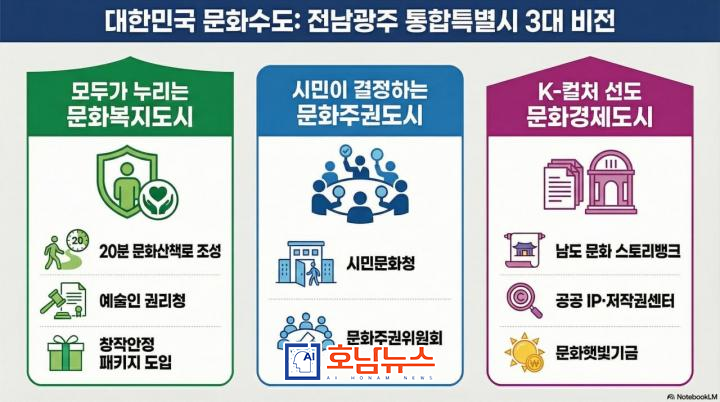 대한민국 문화수도 이미지 / 사진제공=민형배의원실 |
전남·광주 통합특별시를 둘러싼 정책 경쟁이 ‘문화 패권’으로 확장됐다. 단순한 문화진흥을 넘어 도시의 구조와 경제를 재편하는 ‘문화국가 전략’이 본격화되는 흐름이다.
더불어민주당 전남광주통합특별시장 경선후보인 민형배 국회의원(광주 광산구을)은 2일 정책 발표를 통해 전남광주를 ‘대한민국 문화수도’로 도약시키기 위한 초대형 문화정책 비전을 공식 선언했다.
민 의원은 “광주의 민주주의와 예술, 전남의 해양·생태·문학 자산은 이미 세계적 잠재력을 갖고 있다”며 “이제는 문화가 삶을 넘어 산업과 일자리, 투자까지 연결되는 ‘도시의 핵심 엔진’이 되어야 한다”고 강조했다.
이번 비전은 ▲문화주권도시 ▲문화복지도시 ▲문화경제도시 등 ‘3대 문화혁명 전략’을 중심으로 설계됐다.
■ “시민이 문화의 주인”… ‘문화주권도시’ 대전환
민형배 후보는 문화정책의 권력을 시민에게 돌려주는 구조 개편을 최우선 과제로 제시했다.
핵심은 ‘시민문화청’ 신설이다.
이는 단순 행정기구가 아닌, 시민과 예술인이 정책을 직접 설계하고 결정하는 ‘문화 거버넌스 플랫폼’으로 기능하게 된다.
또한 ‘문화주권위원회’를 구성해 주요 문화사업과 예산, 정책 방향을 시민 참여 기반으로 운영하는 체계를 구축한다.
이는 기존 ‘행정 주도 문화정책’에서 ‘시민 주권형 문화정책’으로의 구조적 전환을 의미한다.
■ “20분 안에 문화가 온다.”… 일상 속 ‘문화복지도시’ 실현
문화 접근성의 혁명도 추진된다.
민 후보는 전남 22개 시·군과 광주 5개 자치구 전역에 동네책방, 작은영화관, 생활문화센터 등 생활밀착형 문화거점을 촘촘히 구축하겠다고 밝혔다.
핵심 개념은 ‘20분 문화산책 도시’.
시민 누구나 20분 이내에 문화시설을 이용할 수 있는 생활권 문화망을 완성하겠다는 전략이다.
또한 ‘예술인 창작안정 패키지’, ‘예술인 권리청’ 신설, 권역별 ‘예술인 자유특구’ 조성, 등을 통해 예술인이 안정적으로 정착하고 창작할 수 있는 환경을 구축한다.
아울러 맞춤형 문화복지 바우처와 배리어프리 정책을 확대해 장애인·노인·청년 등 모든 계층의 문화 접근성을 획기적으로 높일 방침이다.
■ “문화가 돈이 된다”… ‘문화경제도시’ 산업화 선언
이번 비전의 핵심은 문화의 산업화다.
민 후보는 ‘남도 원형문화 AI 대전환 전략’을 통해 전남광주의 언어, 생활문화, 자연유산 등 고유 자산을 데이터화하고 이를 콘텐츠·관광·디지털 산업으로 연결하겠다는 구상을 내놨다.
이를 위해 문화 데이터 기반 일자리 창출, 스토리뱅크 구축, 공공 IP센터 설립, 디지털 아카이브 조성 등 문화산업 인프라를 전면 구축한다.
또한 ‘문화햇빛기금’과 ‘로컬 IP 펀드’를 조성해 문화 콘텐츠 제작과 기업 투자를 지원하는 금융 생태계까지 함께 설계한다는 계획이다.
■ “광주는 허브, 전남은 실험”… 초광역 문화루트 완성
민형배 후보는 전남과 광주의 역할 분담을 통해 ‘하나의 문화권·경제권’을 완성하겠다는 전략도 제시했다.
광주는 기획·유통·국제교류 중심 허브로, 전남은 창작과 실험이 이루어지는 생산 거점으로 기능하게 된다.
이를 통해 단순한 행정 통합을 넘어 ‘문화가 산업을 견인하는 초광역 경제 모델’을 구축하겠다는 구상이다.
■ “문화가 도시의 운명을 바꾼다.”
민 후보는 “전남광주 통합은 행정구역을 합치는 일이 아니라, 하나의 문화권과 경제권을 만드는 역사적 프로젝트”라며 “시민이 문화의 주인이 되는 도시, 예술가가 살고 성장하는 도시, 문화가 산업으로 이어지는 도시를 반드시 실현하겠다.”고 강조했다.
이어 “전남광주를 대한민국을 대표하는 문화수도이자 세계가 주목하는 글로벌 문화도시로 만들겠다.”고 역설했다.
이번 비전은 전남광주 통합특별시 논의가 행정·산업 중심을 넘어 ‘문화 패러다임 경쟁’으로 확장됐음을 보여주는 상징적 신호탄으로 평가된다.
“Culture Is Power”… Min Hyung-bae Declares Vision for Jeonnam–Gwangju as Korea’s Cultural Capital
— A sweeping “Three Cultural Revolutions” blueprint where citizens decide, everyone benefits, and culture drives industry —
【Jeonnam·Gwangju = AI Honam News】 aihnnews@kakao.com
The policy competition surrounding the proposed Jeonnam–Gwangju Integrated Special City is expanding into a contest for cultural dominance. Moving beyond simple cultural promotion, a full-scale “cultural state strategy” aimed at restructuring the city’s economy and social fabric is now underway.
Min Hyung-bae, a National Assembly member (Gwangju Gwangsan-eul) and Democratic Party candidate for mayor of the Jeonnam–Gwangju Integrated Special City, on April 2 unveiled a comprehensive cultural policy vision to transform the region into the cultural capital of South Korea.
“Gwangju’s legacy of democracy and art, combined with Jeonnam’s marine, ecological, and literary assets, already holds global potential,” Min said. “Now is the time for culture to become the core engine that connects life, industry, jobs, and investment.”
The vision is structured around three key pillars:
▲ Cultural Sovereignty City
▲ Cultural Welfare City
▲ Cultural Economy City
■ “Citizens Own Culture”… Transition to a Cultural Sovereignty City
Min emphasized a structural shift that returns cultural policymaking power to citizens.
At the center of this initiative is the establishment of a “Citizen Culture Agency,” designed not as a conventional administrative body but as a governance platform where citizens and artists directly participate in designing and deciding cultural policies.
A “Cultural Sovereignty Committee” will also be formed to ensure citizen-driven decision-making in major projects, budgets, and policy directions—marking a transition from government-led to citizen-led cultural governance.
■ “Culture Within 20 Minutes”… Realizing a Cultural Welfare City
A major expansion in cultural accessibility is also planned.
Min pledged to build a dense network of community-based cultural facilities—including local bookstores, small cinemas, and lifestyle culture centers—across all 22 counties in Jeonnam and five districts in Gwangju.
The core concept is a “20-minute cultural city,” where every citizen can access cultural spaces within a 20-minute radius.
Additional initiatives include:
A “Stable Creation Package” for artists
Establishment of an “Artists’ Rights Agency”
Creation of region-specific “Artist Free Zones”
These measures aim to create a sustainable environment where artists can live, work, and grow.
Customized cultural welfare vouchers and barrier-free policies will also be expanded to ensure equal access for all, including the elderly, people with disabilities, and youth.
■ “Culture Generates Wealth”… Launch of a Cultural Economy City
The core of the vision lies in industrializing culture.
Through a “Southern Region Original Culture AI Transformation Strategy,” Min proposed digitizing local languages, lifestyles, and natural heritage, and linking them to content, tourism, and digital industries.
To support this, the plan includes:
Culture data-based job creation
Establishment of a Story Bank
Creation of a Public IP Center
Development of digital archives
In addition, financial ecosystems such as a “Cultural Sunshine Fund” and a “Local IP Fund” will be introduced to support cultural content production and investment.
■ “Gwangju as Hub, Jeonnam as Lab”… Building a Mega Cultural Corridor
Min also outlined a role-sharing strategy between Gwangju and Jeonnam.
Gwangju will serve as a hub for planning, distribution, and international exchange, while Jeonnam will function as a base for creation and experimentation.
This integrated approach aims to establish a super-regional economic model where culture drives industry.
■ “Culture Will Redefine the City’s Destiny”
Min stated, “The integration of Jeonnam and Gwangju is not just administrative—it is a historic project to create a unified cultural and economic sphere.”
He added, “We will build a city where citizens are the owners of culture, where artists can thrive, and where culture evolves into industry.”
He concluded by pledging to transform Jeonnam–Gwangju into both Korea’s leading cultural capital and a globally recognized cultural city.
This vision signals that the discourse around the Jeonnam–Gwangju Integrated Special City is shifting beyond administration and industry into a full-fledged competition over cultural paradigms.
 ai호남뉴스 박충배 편집/칼럼/논설 aihnnewsr@kakao.com