2026.05.18 (월) 16:06



 닫기
닫기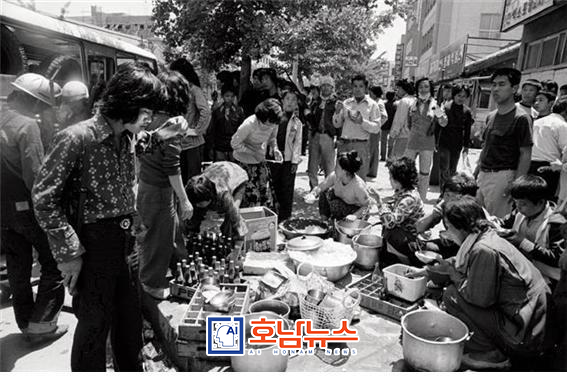 5.18광주민주항쟁 / 사진제공=chat gpt |
“광주는 스스로 살아남았다”… 1980년 5월 22일, 총칼이 물러난 자리에 피어난 대동세상
주먹밥과 헌혈, 시민 질서와 공동체… 계엄군은 봉쇄했고 시민은 서로를 살렸다
【전남·광주=AI호남뉴스】 aihnnews@kakao.com
1980년 5월 22일의 광주는 참혹함 속에서도 인간 존엄과 공동체 정신이 살아 숨 쉬던 도시였다.
전날 계엄군의 집단발포와 무차별 학살로 수많은 시민들이 목숨을 잃었지만, 광주는 무너지지 않았다.
총칼이 잠시 물러난 자리에는 약탈과 혼란이 아닌 시민들의 자율과 연대, 그리고 서로를 살리려는 ‘대동세상’이 피어났다.
새벽 4시 10분.
시위대는 계엄군이 철수한 전남도청에 진입했다.
핏자국과 탄흔, 깨진 유리와 처참한 시신 흔적이 남아 있던 도청 일대는 시민들의 손으로 다시 정비되기 시작했다.
새벽이 밝아오자 금남로와 충장로에는 시민들이 쏟아져 나왔다.
누군가는 피 묻은 거리를 닦았고, 누군가는 시신을 수습했으며, 누군가는 다친 시민들을 병원으로 옮겼다.
광주는 국가가 버린 도시였지만 시민들은 서로를 버리지 않았다.
오전 6시 30분, 시민군은 시내 주요 지역에 차량을 배치하며 자체 경계 활동에 들어갔다.
계엄군이 사라진 도시는 오히려 시민들의 질서 속에 유지됐다.
약탈도 없었고 무정부 상태도 아니었다.
시민들은 스스로 도시를 지켰고, 서로의 생명을 보호했다.
도청 안에는 ‘5·18 수습대책위원회’가 꾸려졌다.
학생과 시민들은 조직적으로 움직이기 시작했고, 시민학생투쟁위원장에는 김종배가 선출됐다.
질서 유지와 부상자 지원, 식량 배급과 장례 절차까지 시민들이 직접 맡았다.
특히 여대생과 여고생들의 헌신은 광주의 또 다른 얼굴이었다.
이들은 주먹밥을 만들고 취사를 도우며 부상자들을 돌봤다.
누군가는 병원에서 피를 닦았고, 누군가는 울부짖는 유가족 곁을 지켰다.
오전 10시 30분부터는 각 병원에 안치된 희생자들의 시신 이송과 입관 작업이 시작됐다.
도청 앞 분수대 주변은 임시 안치소로 변했고, 시민들은 이름도 남기지 못한 희생자들의 관 앞에서 눈물을 삼켰다.
그러나 군부는 광주의 고통 앞에서도 봉쇄와 협박을 멈추지 않았다.
오전 11시, 계엄사령부는 광주 완전 봉쇄를 지시했다.
도시는 외부와 철저히 차단됐고, 언론은 진실을 왜곡했다.
같은 시각 담양과 화순 등 전남 곳곳에서도 계엄군의 양민 학살과 폭력이 이어졌다는 증언이 확산되며 공포와 분노가 전남 전역으로 퍼져 나갔다.
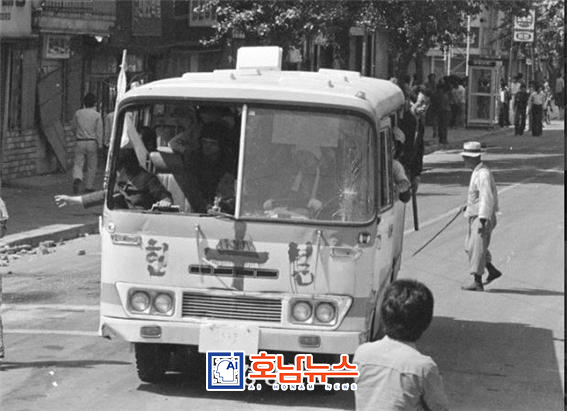
오전 11시 20분, 적십자병원 헌혈차와 시민 지프차는 시내를 돌며 헌혈 참여를 호소했다.
“피가 부족합니다. 시민 여러분 도와주십시오.”
광주 시민들은 줄을 서서 자신의 피를 내놓았다.
누가 먼저랄 것도 없이 서로의 생명을 살리기 위해 팔을 걷어붙였다.
낮 12시 30분, 5·18 수습대책위원회는 전교사를 방문해 계엄군 재투입 금지 등 7개 사항을 요구했다.
광주는 마지막까지 대화를 원했다.
그러나 군부는 시민의 요구에 총부리로 답했다.
오후 1시, AH-1J 코브라 헬기 2대가 조선대와 광주천 일대 상공에서 위협 사격을 가했다.
하늘에서는 헬기가 시민을 겨눴고, 땅에서는 여전히 피 냄새가 가시지 않았다.
오후 6시에는 학생 수습대책위원회가 별도로 구성되며 항쟁은 더욱 조직화됐다.
시민들은 단순한 분노를 넘어 민주주의를 지키기 위한 공동체적 저항 체계를 만들어가고 있었다.
하지만 같은 날 오후 7시 20분, 박충훈 국무총리 서리는 특별담화를 통해 광주를 “치안 부재 상태”라고 규정했다.
시민들이 질서를 지키며 서로를 살리고 있던 도시를 군부는 폭도와 무법천지로 왜곡한 것이다.
그러나 역사는 알고 있다.
1980년 5월 22일의 광주는 무너진 도시가 아니었다.
그곳은 국가폭력 속에서도 인간성과 공동체를 끝까지 지켜낸 민주주의의 현장이었다.
주먹밥을 나누던 손, 헌혈을 위해 줄 서던 시민들, 시신을 수습하며 울던 어머니들, 끝까지 서로를 지키려 했던 광주의 사람들.
그날 광주는 국가가 아니었다.
광주는 시민이었다.
그리고 대한민국 민주주의는 바로 그 시민들에 의해 살아남았다
 5.18광주민주항쟁 / 사진제공=chat gpt |
【AI Honam News Column】
“Gwangju Survived on Its Own” — May 22, 1980, the Day a Great Community Rose Where Guns Fell Silent
Rice balls, blood donations, civic order, and solidarity… while martial law forces sealed off the city, citizens saved one another
【Gwangju & Jeonnam = AI Honam News】 aihnnews@kakao.com
On May 22, 1980, Gwangju remained a city where human dignity and the spirit of community survived amid unimaginable tragedy.
The day before, countless citizens had been killed in the martial law forces’ mass shootings and indiscriminate violence.
Yet Gwangju did not collapse.
In the place where guns had briefly retreated, there emerged not looting or chaos, but civic autonomy, solidarity, and a shared determination to save one another — a true “Daedong Community.”
At 4:10 a.m., demonstrators entered the South Jeolla Provincial Office after the martial law troops withdrew.
The provincial hall, stained with blood, scarred by bullets, and littered with shattered glass and traces of death, began to be restored by the hands of ordinary citizens.
As dawn broke, people poured into Geumnam-ro and Chungjang-ro.
Some cleaned the blood-soaked streets.
Some collected the bodies of the dead.
Others carried the wounded to hospitals.
The state had abandoned Gwangju, but the citizens refused to abandon one another.
At 6:30 a.m., the citizen militia deployed vehicles throughout key areas of the city and began maintaining security.
Contrary to the military’s claims, the city remained orderly under the citizens themselves.
There was no widespread looting, no collapse into anarchy.
The people protected their city and safeguarded each other’s lives.
Inside the Provincial Office, the “May 18 Recovery and Countermeasure Committee” was organized.
Students and citizens began operating in a systematic and coordinated manner, and Kim Jong-bae was appointed chairman of the Citizen-Student Struggle Committee.
Citizens themselves took responsibility for maintaining order, assisting the injured, distributing food, and organizing funerals.
The devotion of female college and high school students became another face of Gwangju’s resistance.
They prepared rice balls, cooked meals, and cared for the wounded.
Some wiped blood from hospital floors.
Others stayed beside grieving families overcome with sorrow.
Beginning at 10:30 a.m., the transfer and burial preparation of victims’ bodies from hospitals across the city began in earnest.
The fountain area in front of the Provincial Office became a temporary mortuary, where citizens wept before coffins bearing the bodies of victims whose names were still unknown.
Yet even in the face of Gwangju’s suffering, the military regime refused to stop its blockade and intimidation.
At 11:00 a.m., Martial Law Command ordered the complete isolation of Gwangju.
The city was cut off from the outside world, while the media distorted the truth.
At the same time, testimonies spread throughout Jeonnam Province that martial law forces were committing massacres and violence against civilians in areas such as Damyang and Hwasun, fueling fear and anger across the region.
At 11:20 a.m., blood donation vehicles from the Red Cross Hospital and citizen jeeps drove through the city appealing for blood donations.
“We urgently need blood. Please help save lives.”
Citizens lined up voluntarily to donate their blood.
Without hesitation, they rolled up their sleeves to save one another.
At 12:30 p.m., the May 18 Recovery Committee visited the Combat Education Command and demanded seven measures, including a ban on the redeployment of martial law troops into the city.
Until the very end, Gwangju sought dialogue.
But the military regime answered the citizens’ demands with gun barrels.
At 1:00 p.m., two AH-1J Cobra helicopters carried out threatening fire maneuvers over Chosun University and the Gwangju Stream area.
Helicopters targeted citizens from the sky, while the smell of blood still lingered on the ground.
At 6:00 p.m., a separate Student Recovery Countermeasure Committee was formed, further organizing the resistance movement.
The citizens were moving beyond mere anger, building a communal system of resistance to defend democracy itself.
Yet at 7:20 p.m. that same evening, Acting Prime Minister Park Choong-hoon issued a special statement describing Gwangju as being in a “state of public security collapse.”
The military regime falsely portrayed a city where citizens were protecting order and saving lives as a lawless land ruled by rioters.
But history remembers the truth.
Gwangju on May 22, 1980, was not a fallen city.
It was a place where humanity and community endured against state violence, and where democracy itself survived through the courage of ordinary citizens.
The hands that shared rice balls.
The citizens standing in line to donate blood.
The mothers weeping as they collected the dead.
The people of Gwangju who struggled until the very end to protect one another.
That day, Gwangju was not defined by the state.
Gwangju was defined by its citizens.
And it was those citizens who kept South Korean democracy alive.
 ai호남뉴스 박충배 편집/칼럼/논설 aihnnewsr@kakao.com