2026.05.18 (월) 16:06



 닫기
닫기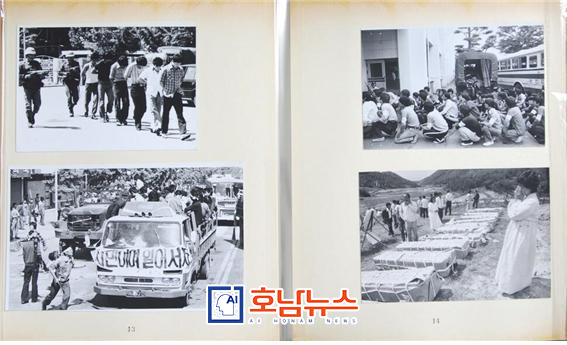 5.18광주민주항쟁 수습된 시신들 / 사진제공=chat gpt |
【전남·광주=AI호남뉴스】 aihnnews@kakao.com
1980년 5월 27일 새벽.
광주는 마지막 숨을 참고 있었다.
도시는 이미 계엄군에 완전히 포위돼 있었다.
그러나 전남도청 안에는 끝내 총을 내려놓지 않은 시민들이 남아 있었다.
학생과 노동자, 시민군과 수습대책위원 등 약 200여 명.
그들은 이미 알고 있었다.
새벽이 오면 죽음이 들이닥친다는 사실을.
하지만 그들은 도망치지 않았다.
대한민국 민주주의를 지키기 위해, 광주의 진실을 남기기 위해 끝까지 도청을 지키기로 결의했다.
5월 27일 0시.
3공수·7공수·11공수여단 특공대는 일반 군복으로 갈아입은 뒤 광주 재진입 작전에 돌입했다.
광주 외곽을 포위한 계엄군 병력은 무려 2만315명에 달했다.
새벽 2시.
도청 안 민주시민투쟁위원회의 마지막 가두방송이 광주 시내에 울려 퍼졌다.
“계엄군이 쳐들어오고 있습니다.”
“광주시민 여러분, 우리를 잊지 말아 주십시오.”
절규에 가까운 그 목소리는 광주의 마지막 호소였다.
민주주의를 향한 마지막 외침이었다.
도청 안 시민군들은 끝까지 항전 의지를 굽히지 않았다.
누군가는 총을 점검했고, 누군가는 마지막 담배를 피웠다.
또 누군가는 서로의 손을 붙잡고 눈물을 삼켰다.
그 새벽 광주는 단순한 도시가 아니었다.
대한민국 민주주의의 최후 보루였다.
새벽 3시 50분.
계엄군 헬기가 전일빌딩 상공에서 위협사격을 가했다.
총탄은 빌딩 외벽을 무차별적으로 갈기며 광주 시민들을 공포 속으로 몰아넣었다.
이어 새벽 4시.
3공수여단 특공대가 전남도청을 완전히 포위한 뒤 최종 공격을 개시했다.
도청 안에서는 치열한 총격전이 벌어졌다.
시민군들은 끝까지 저항했지만, 중무장한 계엄군의 화력 앞에서 하나둘 쓰러져 갔다.
같은 시각 31사단은 전남대와 전남방직 일대에서 특공작전을 벌였고,
11공수여단은 전일빌딩과 관광호텔, YMCA 일대에서 동시다발 진압작전에 나섰다.
광주 전역이 전쟁터였다.
계엄군은 시민과 학생, 부상자까지 가리지 않고 무차별 진압을 이어갔다.
헬기 사격과 집중 발포 속에서 전남도청은 피로 물들었다.
그리고 새벽 5시 15분.
전교사령관은 계엄사령관에게 ‘작전 성공’을 보고했다.
그러나 그것은 결코 성공이 아니었다.
국가가 국민에게 총을 겨눈 민주주의의 참혹한 붕괴였다.
오전 7시.
3·7·11공수 특공대는 20사단에 광주 시내를 인계한 뒤 광주비행장으로 철수했다.
그렇게 광주의 마지막 항전은 막을 내렸다.
열흘 가까이 이어진 5·18민주화운동은 수많은 희생을 남겼다.
공식 집계만 민간인 사망자 166명.
그러나 실제 희생 규모는 지금도 완전히 밝혀지지 않았다.
광주는 패배하지 않았다.
광주는 죽음 앞에서도 인간의 존엄과 민주주의를 포기하지 않았다.
도청에 남아 있던 시민들은 단지 총을 든 사람들이 아니었다.
그들은 “국민을 향한 국가폭력은 결코 정당화될 수 없다”는 진실을 몸으로 증명한 사람들이었다.
오늘 우리가 누리는 민주주의는 그 새벽의 피 위에 세워져 있다.
전일빌딩의 탄흔과 도청의 총성, 그리고 “우리를 잊지 말아 달라”던 절규는 지금도 대한민국 민주주의의 양심으로 남아 있다.
우리는 결코 잊어서는 안 된다.
1980년 5월 27일 새벽의 광주를.
끝까지 인간이기를 포기하지 않았던 사람들을.
그리고 민주주의를 위해 스스로 죽음 속으로 걸어 들어갔던 그들의 마지막 항전을.
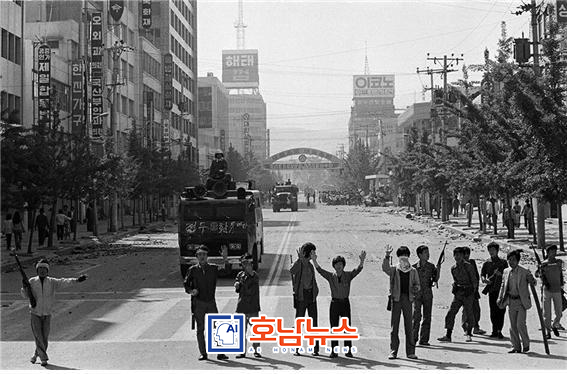 5.18광주민주항쟁 / 사진제공=chat gpt |
【AI Honam News Column】
“Please Do Not Forget Us”… May 27, 1980, Gwangju’s Final Resistance and the Democracy Defended with Blood
Around 200 citizen fighters remained inside the Provincial Office prepared to die… The final dawn of Gwangju amid helicopter gunfire and indiscriminate military suppression
【Gwangju·Jeonnam = AI Honam News】 aihnnews@kakao.com
In the early dawn of May 27, 1980,
Gwangju was holding its final breath.
The city had already been completely surrounded by martial law troops.
Yet inside the Jeonnam Provincial Office, there were still citizens who refused to lay down their arms.
Students, workers, citizen militias, and members of the Citizens’ Settlement Committee — about 200 people in all.
They already knew what awaited them.
They knew that when dawn came, death would arrive with it.
But they did not flee.
To defend democracy in South Korea, and to preserve the truth of Gwangju, they resolved to remain inside the Provincial Office until the very end.
At midnight on May 27,
special forces from the 3rd, 7th, and 11th Airborne Brigades changed into ordinary military uniforms and began the operation to retake Gwangju.
A total of 20,315 martial law troops surrounded the outskirts of the city.
At 2:00 a.m.,
the final street broadcast from the Citizens’ Democratic Struggle Committee echoed throughout Gwangju.
“The martial law troops are coming.”
“Citizens of Gwangju, please do not forget us.”
Those desperate words were Gwangju’s final plea.
They were the last cry for democracy.
Inside the Provincial Office, the citizen fighters refused to surrender their will to resist.
Some checked their rifles.
Some smoked what might be their final cigarette.
Others held each other’s hands in silence, swallowing back tears.
That dawn, Gwangju was no ordinary city.
It was the final stronghold of South Korean democracy.
At 3:50 a.m.,
military helicopters opened threatening fire over the Jeonil Building.
Bullets tore mercilessly into the building’s exterior, plunging the citizens of Gwangju into terror.
Then, at 4:00 a.m.,
special forces from the 3rd Airborne Brigade completely surrounded the Jeonnam Provincial Office and launched the final assault.
A fierce gun battle erupted inside the building.
The citizen fighters resisted until the very end, but one by one they fell before the overwhelming firepower of the heavily armed troops.
At the same time, the 31st Division launched special operations around Chonnam National University and the Jeonnam Textile area, while the 11th Airborne Brigade carried out simultaneous suppression operations around the Jeonil Building, the Tourist Hotel, and the YMCA.
All of Gwangju had become a battlefield.
The martial law forces continued indiscriminate suppression, sparing neither civilians, students, nor the wounded.
Under helicopter gunfire and concentrated shooting, the Jeonnam Provincial Office was drenched in blood.
Then, at 5:15 a.m.,
the commander of the Combat Education Command reported “operation successful” to the martial law commander.
But it was never a success.
It was the catastrophic collapse of democracy — a state turning its guns on its own people.
At 7:00 a.m.,
the 3rd, 7th, and 11th Airborne special forces handed control of Gwangju over to the 20th Division and withdrew to Gwangju Air Base.
Thus ended Gwangju’s final resistance.
The May 18 Democratic Uprising, which had continued for nearly ten days, left countless victims behind.
The official death toll alone recorded 166 civilian deaths.
Yet the true scale of the tragedy has still never been fully revealed.
Gwangju was not defeated.
Even in the face of death, Gwangju did not abandon human dignity or democracy.
The citizens who remained inside the Provincial Office were not merely armed fighters.
They were people who proved with their own bodies that state violence against its people can never be justified.
The democracy we enjoy today was built upon the blood spilled during that dawn.
The bullet marks on the Jeonil Building, the gunfire at the Provincial Office, and the desperate cry — “Please do not forget us” — still remain as the conscience of South Korean democracy.
We must never forget.
We must never forget the Gwangju of dawn on May 27, 1980.
The people who refused to stop being human until the very end.
And their final resistance, as they walked knowingly toward death for the sake of democracy.
 ai호남뉴스 박충배 편집/칼럼/논설 aihnnewsr@kakao.com